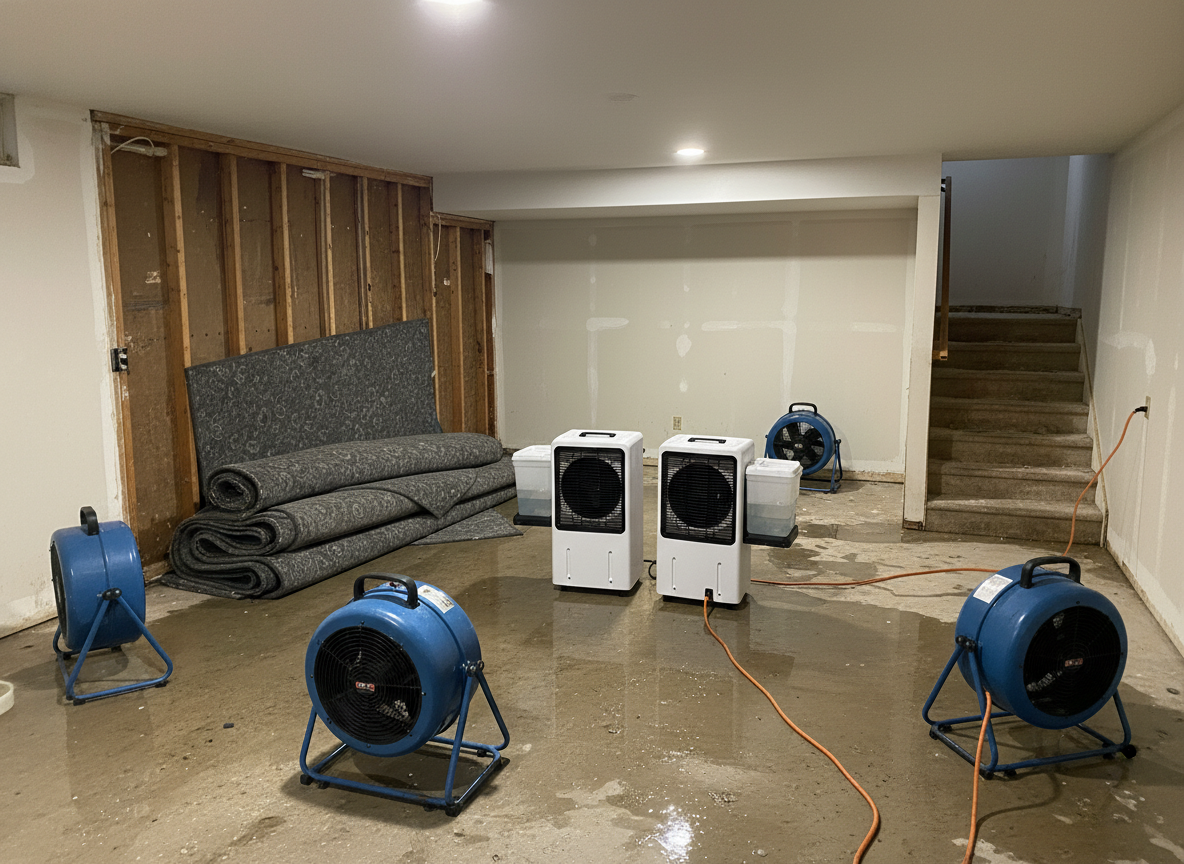
Wet carpet removal begins with determining the water category and how far moisture has traveled into the pad, backing, and subfloor. In older two-flats and bungalows common across Logan Square, Bridgeport, and Pilsen, finished basements often hide saturation that reaches the concrete or wood subfloor. Carpet pads almost always require full removal because they trap water and promote mold growth within 24 to 48 hours. The carpet itself may be salvageable after extraction if the water is Category 1 and the backing remains intact, but Category 2 or 3 water usually means both carpet and pad must be cut out and disposed of to protect indoor air quality.
Independent local contractors assess edge cases such as combined sewer backups during heavy summer storms in neighborhoods like Wicker Park and the West Loop, where sewage can travel under baseboards and into adjacent rooms. Safety steps include turning off electricity to affected areas, using PPE when Category 3 water is present, and isolating the space to prevent cross-contamination. After removal, contractors document moisture readings on the subfloor and walls so homeowners have records for insurance claims. Drying equipment is then positioned to pull remaining moisture from exposed surfaces before any new flooring is installed.
Frozen pipes that burst during Chicago winters create another frequent scenario in Rogers Park and Uptown buildings, where water can pool under wall-to-wall carpet for days before discovery. Contractors check for hidden moisture behind baseboards and inside HVAC returns because incomplete drying leads to mold colonies that spread through the home. Materials that can sometimes be dried in place, such as hardwood under carpet, require targeted air movers and dehumidifiers rather than blanket removal.
Technician insight
In Chicago, the thing that catches most people out with Wet Carpet Removal is older brick two-flats in neighborhoods like Logan Square where finished basements sit on combined sewers. Homeowners often pull the carpet themselves but leave the pad and never check under the tack strip, so moisture stays trapped against the concrete through the winter and mold appears months later.
Sewer Backup in South Loop Two-Flat
Heavy rain overwhelmed the combined sewer line and sent Category 3 water under wall-to-wall carpet in a finished basement. The independent contractor found the pad fully saturated and moisture readings above 20 percent on the concrete subfloor extending three feet past the carpet edge. Removal included carpet, pad, and baseboards, followed by drying verification before the homeowner filed the insurance claim.
Wet Carpet Removal Services We Offer
✓Carpet Pad Removal
Full extraction of saturated padding that cannot be dried and must be discarded to stop mold growth under Chicago carpets.
✓Category 3 Water Carpet Disposal
Safe cutting and removal of carpet contaminated by sewage or floodwater in compliance with local disposal rules.
✓Subfloor Moisture Assessment
Detailed moisture meter readings and documentation of concrete or wood subfloors after carpet removal in older Cook County homes.
✓Baseboard and Trim Detachment
Careful removal of baseboards to allow drying behind walls and prevent hidden mold in two-flats and bungalows.
✓Post Removal Drying Verification
Follow-up checks with meters and thermal imaging to confirm subfloors are dry before new flooring installation.
How it works
- 1
Call The Referral Line
Contact Pro Water Damage Solutions and describe the water event and affected rooms in your Chicago property.
- 2
Independent Contractor Inspection
A local contractor visits, identifies water category, measures moisture, and explains exactly what carpet and pad sections need removal along with pricing.
- 3
Removal And Disposal Work
The contractor cuts out wet materials, removes them from the home, and disposes of them according to local guidelines.
- 4
Drying Checks And Documentation
Moisture readings are taken on remaining surfaces and shared with you for insurance purposes before any reinstallation.
Pricing
pricing depends on the job and is discussed with the contractor after you call