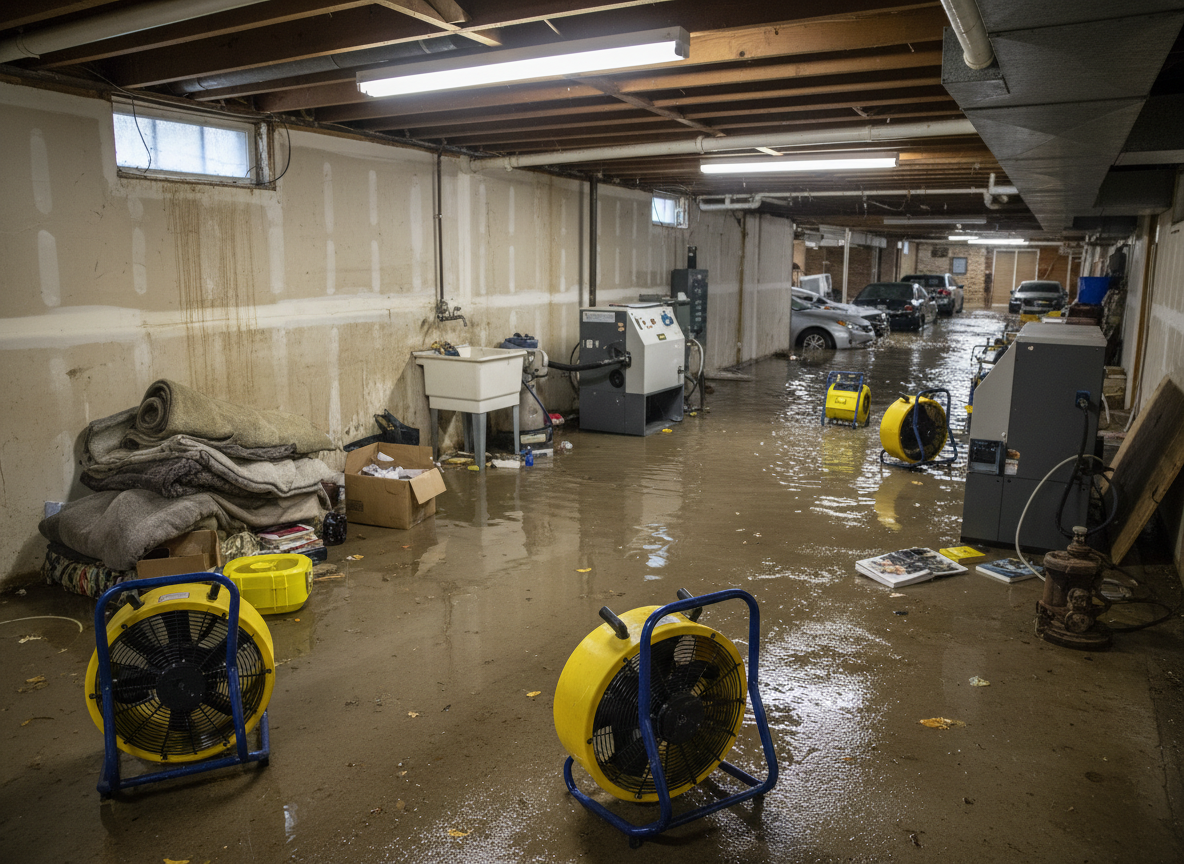
Sump pump failure in Chicago often leads to rapid basement flooding because many older brick bungalows and two-flats in areas like Logan Square and Bridgeport have finished lower levels tied into the combined sewer system. When pumps stop during heavy summer storms or winter freezes, water can rise quickly and mix with sewage. Independent local contractors first classify the water as Category 1, 2, or 3 to decide what must be removed versus what can be dried in place.
Contractors extract standing water, then remove saturated carpet padding, particleboard underlayment, and any drywall below the flood line that cannot be salvaged. In older homes common to Hyde Park and Andersonville, they also check for hidden moisture in plaster walls and behind cabinets. Safety steps include turning off electricity to affected circuits and using PPE when Category 3 water is present to avoid contact with contaminants.
After extraction, contractors use moisture meters and thermal imaging to locate remaining dampness in joists and subfloors. They set up drying equipment only after confirming the source is resolved, then return for follow-up checks to prevent mold growth in the humid continental climate. Edge cases include burst pipes that refreeze or repeated backups in homes without battery backup systems.
Homeowners should avoid entering flooded basements until power is isolated and should document conditions for insurance purposes. The referral line connects callers to contractors who handle the full scope without promising coverage or billing insurers directly.
Technician insight
In Chicago, the thing that catches most people out with Sump Pump Failure Cleanup is how quickly combined sewers back up into finished basements of older two-flats during summer storms, especially in Logan Square and Pilsen where the water mixes with sewage and hides behind finished walls.
Sump Pump Failure in Logan Square Two-Flat
Heavy rain overwhelmed the sump pump in a 1920s two-flat, sending Category 3 water into a finished basement. The contractor found water behind drywall and under laminate flooring that had wicked up several feet. Extraction, selective demolition, and drying equipment were used; follow-up readings confirmed the space was dry within a week.
Sump Pump Failure Cleanup Services We Offer
✓Basement Water Extraction After Pump Failure
Contractors remove standing water from finished basements in Chicago two-flats where sump pumps have failed during storms.
✓Category 3 Water Remediation
Handling of contaminated water from combined sewer backups requires removal of affected materials and disinfection protocols.
✓Sump Pit Cleaning and Reset
Contractors clean debris from the pit, inspect the float switch, and confirm the pump is operational before drying begins.
✓Moisture Mapping in Older Homes
Detailed scanning identifies hidden moisture in brick foundations and plaster walls common in neighborhoods like Wicker Park and Uptown.
✓Insulation and Drywall Removal
Saturated insulation and lower sections of drywall are cut out to allow proper drying and reduce mold risk in humid conditions.
✓Post-Flood Drying Verification
Follow-up visits confirm moisture levels have returned to normal before any reconstruction in affected spaces.
How it works
- 1
Make the call
Contact the referral line and describe the sump pump issue and location in Chicago or nearby suburbs.
- 2
Independent inspection
An independent local contractor visits, assesses water category, scope, and discusses pricing directly with you.
- 3
Work begins
The contractor extracts water, removes unsalvageable materials, and sets up drying equipment.
- 4
Drying checks
Follow-up visits confirm moisture readings and ensure the space is ready before any rebuilding.
Pricing
pricing depends on the job and is discussed with the contractor after you call