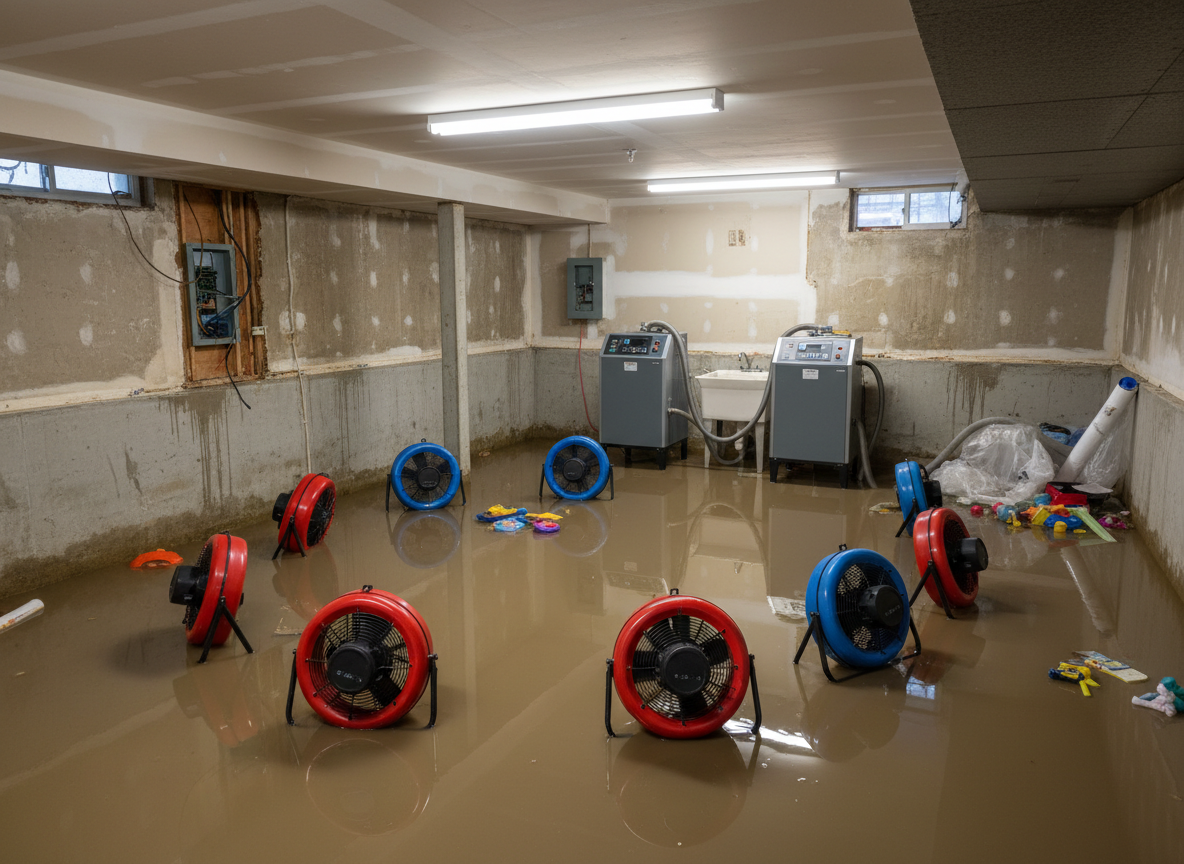
Structural drying begins once standing water is removed and focuses on pulling moisture from framing, subfloors, wall cavities, and insulation that cannot simply be replaced. In Chicago’s older brick bungalows and two-flats common in Logan Square and Bridgeport, water often travels behind plaster and lathe or into balloon-framed walls, requiring targeted demolition of baseboards, sections of drywall, and carpet padding that cannot be salvaged. Independent local contractors use moisture meters and thermal imaging to decide what stays and what must come out before drying equipment is placed.
Category 1 water from a clean supply line may allow more materials to remain in place, while Category 2 or 3 water from combined sewers during summer storms or basement backups demands removal of porous items such as particleboard cabinets, vinyl flooring, and fiberglass batt insulation. Edge cases include frozen pipes that burst inside exterior walls during winter, leaving ice that melts slowly into joist bays, and finished basements where homeowners have added drywall over rigid foam that hides ongoing saturation. Safety warnings cover electrical hazards when equipment is used near outlets that may have been submerged and the need for proper ventilation when drying adhesives or treated lumber.
Drying is verified through repeated readings at multiple depths rather than surface checks alone, because Chicago’s humid continental climate can allow hidden moisture to reappear once dehumidifiers are removed. Contractors document conditions for insurance claims, noting affected square footage, materials removed, and equipment used, but coverage decisions remain between the homeowner and their carrier.
Technician insight
In Chicago, the thing that catches most people out with Structural Drying is how older two-flats in Logan Square and Pilsen have balloon framing that lets water travel two stories up from a single basement backup, so you end up drying cavities you never see until you open the walls.
Wicker Park Two-Flat After Summer Storm
Heavy rain overwhelmed combined sewers and sent Category 3 water into a finished basement. The contractor found saturated drywall behind the washer and water that had wicked into floor joists under the first-floor kitchen. They removed lower sections of wall, extracted wet insulation, and ran cavity drying equipment for six days until readings stabilized.
Structural Drying Services We Offer
✓Wall Cavity Drying
Independent local contractors create small access points to circulate air through stud bays in Chicago two-flats where water has wicked upward from basement backups.
✓Subfloor Drying After Flooding
Contractors remove finished flooring and place drying mats or injectors beneath plywood and hardwood to address saturation common after heavy rain in combined-sewer areas.
✓Insulation Extraction and Replacement
Wet fiberglass or cellulose is removed from attics and walls in older homes in neighborhoods like Hyde Park and Rogers Park before new material is installed once drying is complete.
✓Hardwood Floor Drying
Contractors use negative-pressure systems and dehumidifiers to pull moisture from tongue-and-groove floors without full removal when water is caught before cupping occurs.
✓Joist and Beam Drying
Targeted airflow and monitoring equipment are placed in crawl spaces and basement ceilings of brick buildings to dry structural lumber after pipe or sewer events.
How it works
- 1
Call the referral line
You contact Pro Water Damage Solutions and describe the water event, location, and visible damage in your Chicago property.
- 2
Independent local contractor inspects and explains scope and pricing
A referred contractor visits, checks moisture levels, identifies materials that must be removed versus dried, and discusses the full scope and cost with you directly.
- 3
Work begins
The contractor removes unsalvageable materials, sets up drying equipment, and protects unaffected areas of the home.
- 4
Drying checks
The contractor returns for moisture readings at intervals until structural materials reach acceptable dryness levels before any reconstruction.
Pricing
pricing depends on the job and is discussed with the contractor after you call