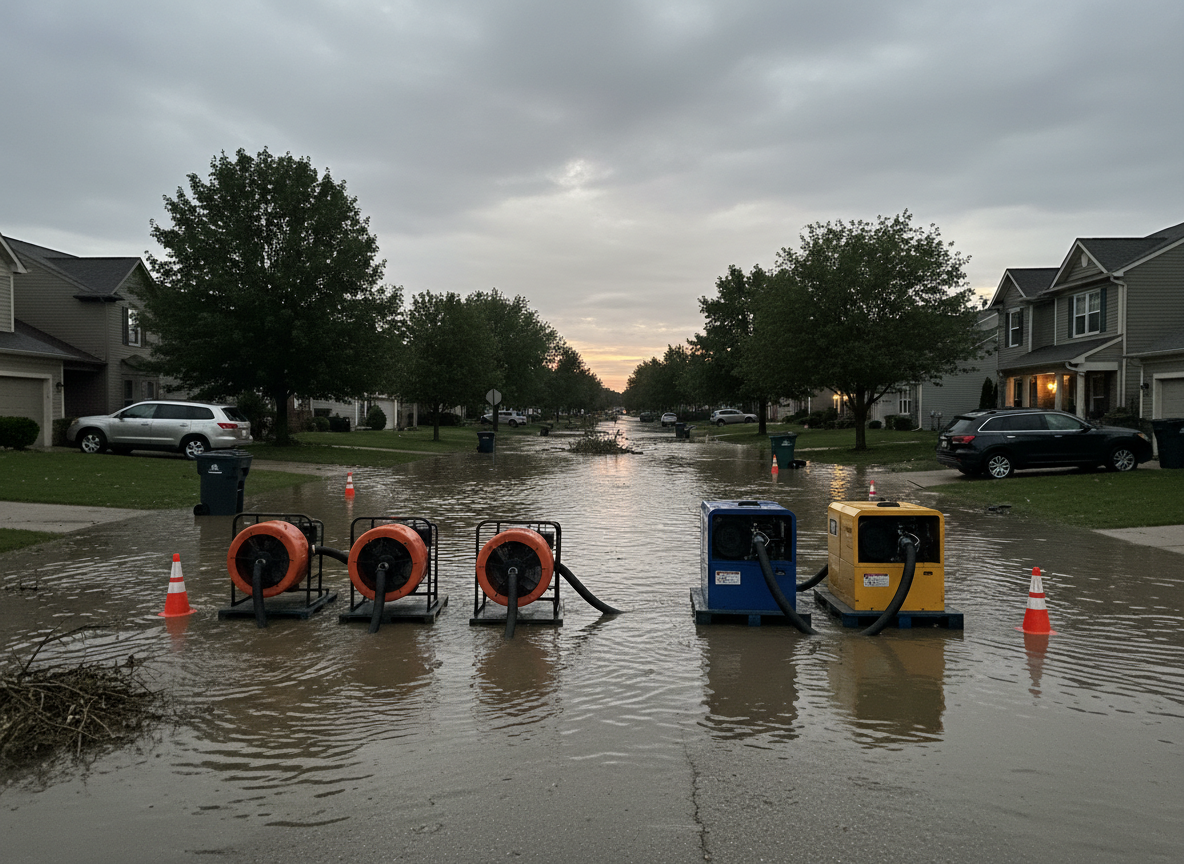
Sewage cleanup requires immediate separation of contaminated materials from salvageable ones. In Chicago two-flats and brick bungalows with finished basements, porous items such as carpet, drywall below the flood line, and insulation must be removed because they absorb Category 3 water and cannot be reliably sanitized. Hard surfaces like concrete floors and some cabinetry may be cleaned and dried if the contractor determines contamination levels allow it.
Independent local contractors follow safety protocols that include PPE, containment barriers, and negative air to prevent cross-contamination into living areas. They document the source, water category, and affected square footage for insurance purposes while explaining the difference between flood damage and sewer-backup claims. Edge cases such as water that has migrated under hardwood floors or into wall cavities behind finished basements often require additional demolition to reach hidden moisture.
Drying is verified with moisture meters before any reconstruction begins, reducing the chance of mold growth in humid continental summers. Contractors also address secondary issues like odor neutralization and disposal of biohazard waste in accordance with local regulations.
Technician insight
In Chicago, the thing that catches most people out with Sewage Cleanup is how quickly Category 3 water travels under finished basement floors in pre-war two-flats; once it reaches the soil beneath the slab, you often have to open more of the floor than homeowners expect because the combined sewer system backs up fast during summer storms.
Sewage Cleanup Services We Offer
✓Category 3 Water Extraction
Removes heavily contaminated water from basements after combined sewer overflows common during heavy summer storms in Chicago.
✓Basement Sewage Removal
Extracts sewage from finished lower levels of older two-flats and bungalows in neighborhoods such as Logan Square and Bridgeport.
✓Contaminated Material Disposal
Safely removes and disposes of saturated drywall, carpet, and insulation that cannot be salvaged after sewer backups.
✓Structural Drying After Sewage
Uses professional equipment to dry concrete and remaining hard surfaces once contaminated materials are removed.
✓Sump Pump Failure Cleanup
Addresses sewage backups triggered by power loss to sump pumps during storms in areas like Hyde Park and Rogers Park.
How it works
- 1
Call The Referral Line
Contact Pro Water Damage Solutions and describe the sewage issue, affected neighborhood, and any visible water category details.
- 2
Independent Contractor Inspection
A local contractor visits, assesses the scope, explains required demolition versus drying, and discusses pricing directly with you.
- 3
Work Begins
The contractor removes contaminated materials, extracts water, contains the area, and starts drying with appropriate equipment.
- 4
Drying Verification
Moisture readings confirm the structure is dry before the contractor completes the project and leaves the site ready for any follow-up repairs.
Pricing
pricing depends on the job and is discussed with the contractor after you call