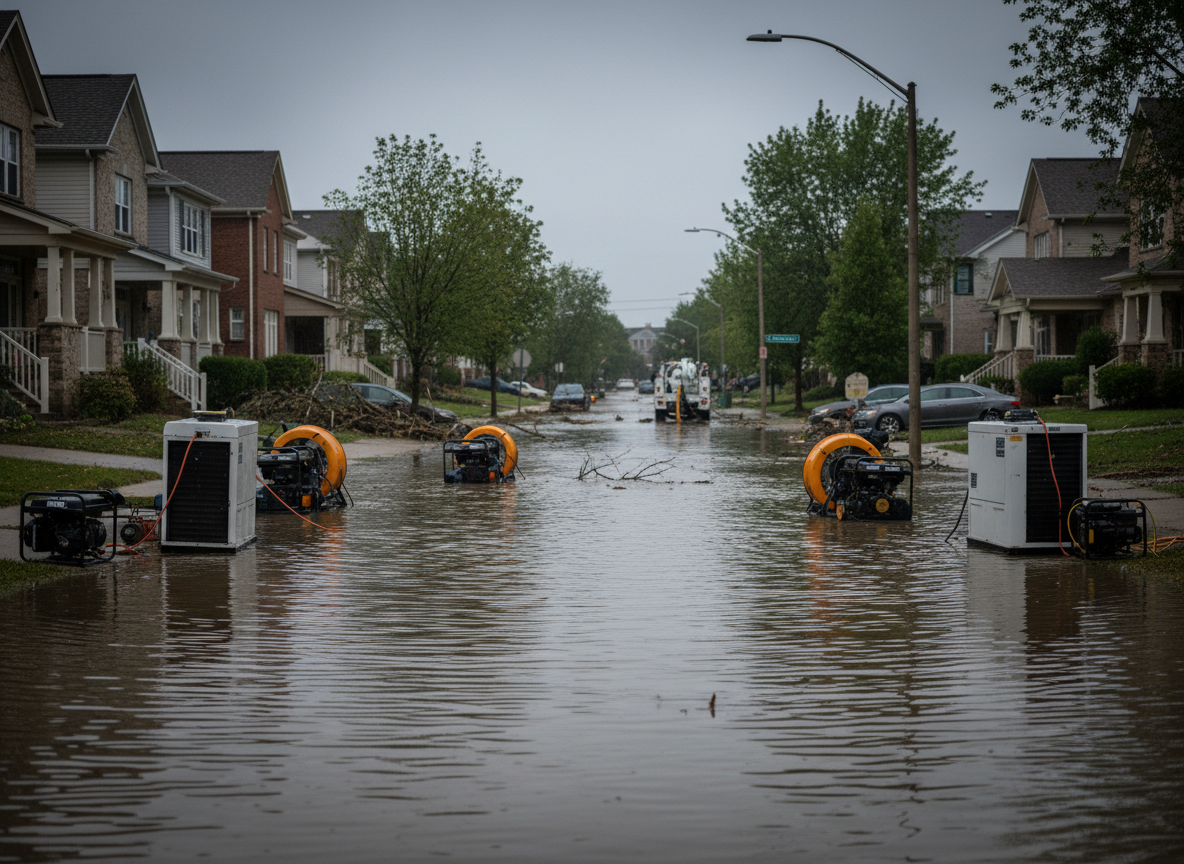
Emergency water damage cleanup begins with identifying the water category and removing standing water before it migrates into walls, subfloors, or finished spaces common in Chicago two-flats and brick bungalows. Category 1 water from a clean source may allow selective drying of certain materials, while Category 2 or 3 water from combined sewers or appliance failures usually requires discarding porous items like carpet pad, drywall below the flood line, and insulation to prevent hidden mold growth during humid summers or after winter thaws.
Independent local contractors assess edge cases such as water trapped behind plaster in older Lakeview or Logan Square homes and verify that electrical systems remain safe before extraction equipment enters. They also address failures in sump pumps without backup power during heavy rains that overwhelm Cook County combined sewers, ensuring moisture readings drop below thresholds before any reconstruction.
Safety warnings include avoiding contact with potentially contaminated water, shutting off power at the panel if flooding reaches outlets, and ventilating spaces only after the source is stopped. Contractors document conditions for insurance claims, noting the distinction between flood damage and sewer backup so homeowners understand what their policy riders typically cover.
Technician insight
In Chicago, the thing that catches most people out with Emergency Water Damage Cleanup is how quickly Category 3 water from combined sewers travels under finished basement floors in pre-1940s two-flats; once it wicks into the joist pockets, you cannot just dry the surface and hope for the best.
Lincoln Park Basement After Heavy Rain
Water entered through the floor drain during a summer storm that overwhelmed the combined sewer. The contractor found saturated carpet pad and lower drywall plus elevated moisture in the subfloor framing. Extraction and removal of affected materials were completed, followed by targeted drying until readings normalized.
Emergency Water Damage Cleanup Services We Offer
✓Basement Water Extraction
Removes standing water from finished or unfinished basements after storms or pipe failures before it soaks into concrete or framing.
✓Category 3 Water Remediation
Handles grossly contaminated water from sewer backups or flooding by removing unsalvageable materials and disinfecting affected areas.
✓Burst Pipe Drying
Extracts water from frozen and burst pipes common in Chicago winters and sets up drying for walls and floors in older brick buildings.
✓Sump Pump Failure Cleanup
Addresses water that enters when sump pumps lose power during summer storms and restores affected lower levels in two-flats and bungalows.
✓Combined Sewer Backup Response
Manages water that enters through floor drains when heavy rain overwhelms Chicago's combined sewer system.
How it works
- 1
Call The Referral Line
Contact Pro Water Damage Solutions to describe the water event and receive a connection to an independent local contractor serving your Chicago neighborhood.
- 2
Contractor Inspection And Scope
An independent local contractor arrives, inspects the affected areas, identifies water category and materials that must be removed versus dried, and explains the full scope and pricing.
- 3
Work Execution
The contractor performs extraction, discards unsalvageable materials, and sets up drying equipment while maintaining safety around electrical and structural concerns.
- 4
Drying Verification
Moisture readings are checked on walls, floors, and contents until levels reach acceptable standards before any reconstruction begins.
Pricing
pricing depends on the job and is discussed with the contractor after you call