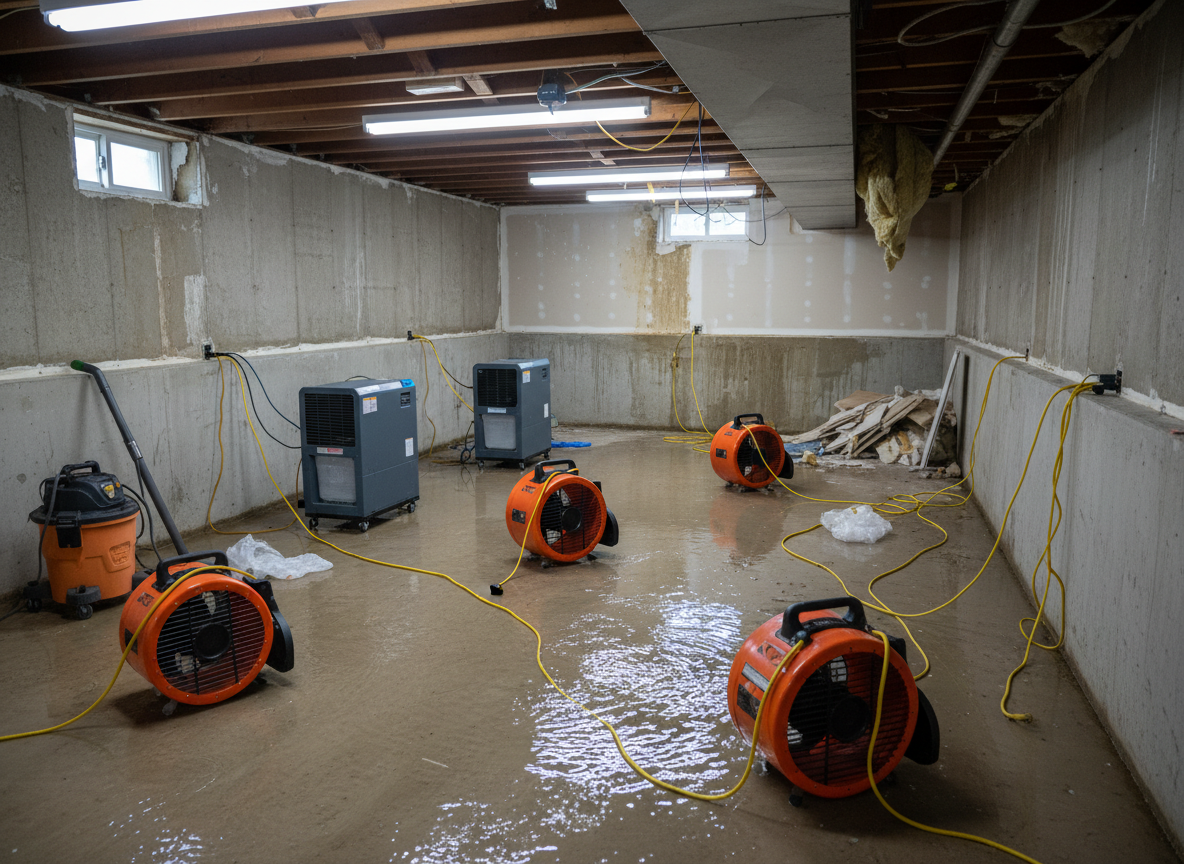
Flood damage restoration begins with accurate classification of the water involved. Category 1 water from clean sources can often be dried in place when caught early, while Category 2 and Category 3 water from contaminated sources requires removal of saturated porous materials such as carpet padding, drywall below the flood line, and insulation. Independent local contractors assess moisture migration into brick bungalow foundations and two-flat basements common in neighborhoods like Logan Square and Bridgeport.
Chicago’s humid continental climate brings heavy summer storms that overwhelm combined sewers, sending water into lower levels, and winter freezes that burst pipes in older homes. Contractors extract standing water, then use professional drying equipment while documenting conditions for insurance claims. Homeowners should avoid entering spaces with electrical hazards or visible sewage until the contractor confirms safety.
Edge cases include hidden moisture behind plaster walls in pre-war buildings and repeated saturation in finished basements where vapor barriers were never installed. Proper extraction and drying prevent mold growth that can appear within 48 hours in warm conditions. The referral service connects callers only with contractors who follow these steps rather than performing the work directly.
Technician insight
In Chicago, the thing that catches most people out with Flood Damage Restoration is how combined sewers push water into finished basements during summer storms, especially in older two-flats where water travels behind lath-and-plaster walls that look dry on the surface.
Lincoln Park Basement Backup
Heavy rain overwhelmed the combined sewer line serving a two-flat in Lincoln Park. An independent local contractor found water had wicked into drywall and carpet padding across two rooms. The contractor removed the saturated materials, extracted remaining water, and ran drying equipment for several days until moisture readings returned to normal.
Flood Damage Restoration Services We Offer
✓Basement Flood Extraction
Independent local contractors remove standing water from finished and unfinished basements after storms or pipe failures common in Chicago two-flats.
✓Sewer Backup Remediation
Contractors handle Category 3 water from combined sewer overflows, removing contaminated materials and disinfecting affected areas in neighborhoods like Pilsen and Uptown.
✓Burst Pipe Water Removal
Contractors extract water from frozen or burst pipes that occur during cold Chicago winters, focusing on older brick homes in Logan Square and Andersonville.
✓Structural Drying Services
Contractors deploy drying equipment to pull moisture from subfloors, joists, and masonry walls in Lakeview and West Loop properties after flood events.
✓Category 2 and 3 Water Cleanup
Contractors identify and treat gray or black water sources, discarding unsalvageable materials while drying what can be saved in South Loop and Rogers Park buildings.
How it works
- 1
Make The Initial Call
Contact Pro Water Damage Solutions to request a referral for flood damage restoration in your Chicago neighborhood.
- 2
Contractor Inspection And Scope Review
An independent local contractor visits the property, inspects affected areas including basements and hidden wall cavities, and explains the full scope of work along with pricing.
- 3
Restoration Work Begins
The contractor extracts water, removes unsalvageable materials, and sets up drying equipment while following safety protocols for Category 2 or 3 water.
- 4
Drying Verification And Completion
The contractor performs moisture checks over multiple visits until materials reach acceptable dryness levels before any reconstruction work can start.
Pricing
pricing depends on the job and is discussed with the contractor after you call