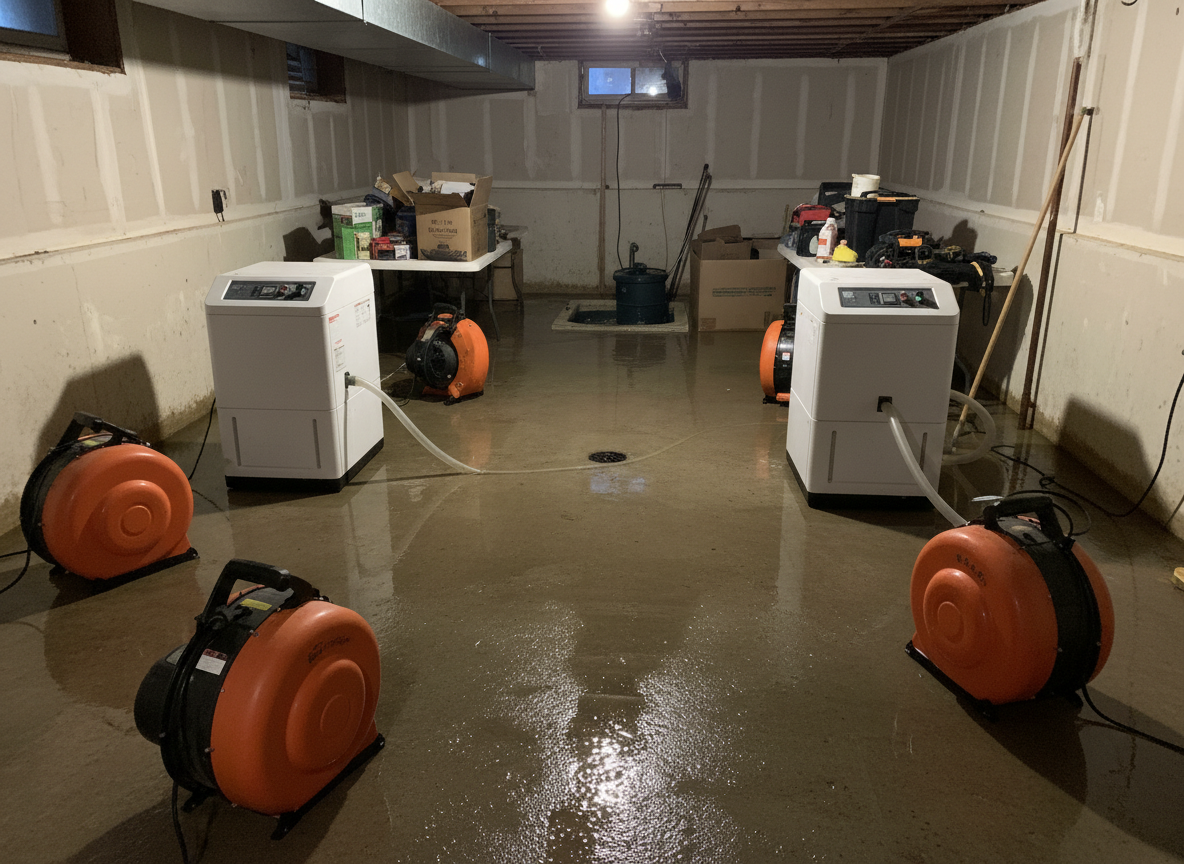
Basement water removal starts with identifying the water category and source. Category 1 water from a clean supply line may allow some drying of non-porous surfaces, while Category 2 gray water or Category 3 black water from combined sewers common in Chicago requires immediate extraction and disposal of saturated drywall, carpet pad, insulation and particleboard. Independent local contractors assess older two-flats and brick bungalows in neighborhoods like Logan Square and Bridgeport where finished basements hide moisture behind paneling or under floating floors.
Contractors use submersible pumps, truck-mounted extractors and air movers to pull water and begin drying. They check for hidden moisture in joists and under slabs that can feed mold growth after humid continental summers or winter pipe bursts. Safety steps include shutting off electrical circuits in standing water and using PPE when Category 3 contamination is present. Porous materials that cannot be fully dried within 48 hours are removed to prevent long-term structural issues.
Edge cases include repeated sump pump failures during heavy rain when backup batteries are absent, or frozen pipes that burst in unheated Hyde Park or Rogers Park basements. Documentation of affected areas, moisture readings and removed materials helps support insurance claims for flood versus sewer-backup riders, though coverage decisions remain between the homeowner and insurer.
Technician insight
In Chicago, the thing that catches most people out with Basement Water Removal is how quickly Category 3 water from combined sewers penetrates the brick foundations and dirt floors common in pre-1950 two-flats in Logan Square or Bridgeport, forcing removal of more finished materials than homeowners expect.
Wicker Park Two-Flat Backup
Heavy summer rain overwhelmed the combined sewer line serving a 1920s two-flat. An independent local contractor found Category 3 water had wicked into the finished basement drywall and under the laminate flooring. The contractor extracted the water, removed the lower four feet of drywall and saturated insulation, then ran drying equipment until moisture readings returned to normal. The homeowner received documentation for the insurance claim and avoided mold growth.
Basement Water Removal Services We Offer
✓Category 3 Sewer Backup Extraction
Independent local contractors remove contaminated water from combined sewer overflows and dispose of affected porous materials in older Chicago two-flats and bungalows.
✓Sump Pump Failure Water Removal
Contractors extract standing water after power loss or pump malfunction and set up drying equipment before mold develops in finished basements.
✓Burst Pipe Basement Drying
Local contractors locate and extract water from frozen or ruptured pipes, then monitor moisture levels in joists and subfloors common in pre-war homes.
✓Finished Basement Water Extraction
Contractors pull water from carpet, drywall and insulation in remodeled spaces while determining which materials can be salvaged versus replaced.
✓Combined Sewer Overflow Cleanup
Independent contractors handle Category 3 water from summer storms that overwhelm Chicago's combined sewer system in neighborhoods like Pilsen and Bridgeport.
How it works
- 1
Make The Call
Contact the referral line and describe the basement water issue, location and any visible Category indicators or odors.
- 2
Contractor Inspection And Scope
An independent local contractor visits, checks moisture levels, identifies water category and explains the work required along with pricing.
- 3
Water Removal And Material Decisions
The contractor extracts standing water, removes unsalvageable porous materials and begins drying with professional equipment.
- 4
Drying Verification
Ongoing moisture checks confirm the space has dried sufficiently before any reconstruction planning begins.
Pricing
pricing depends on the job and is discussed with the contractor after you call