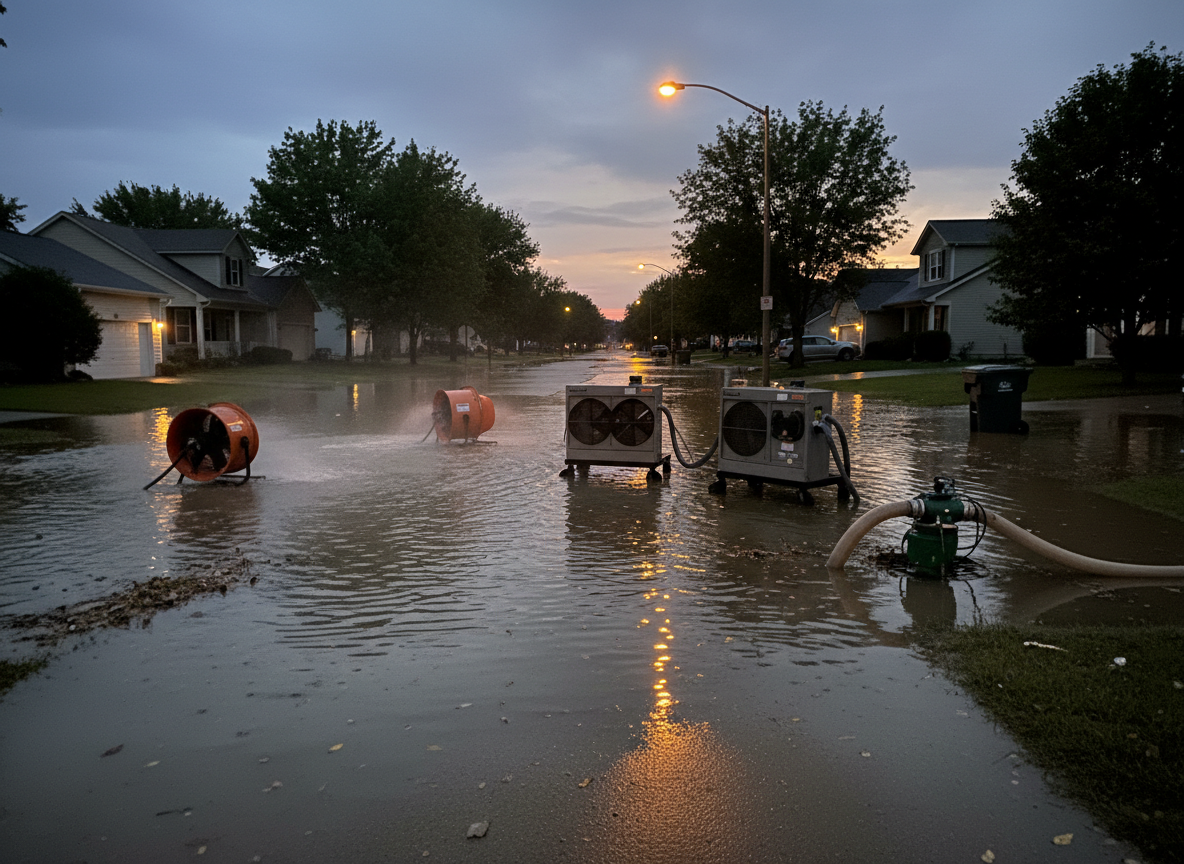
Water extraction begins with classifying the water as Category 1 clean, Category 2 gray, or Category 3 black to determine what can be salvaged and what must be removed. In Chicago's older brick two-flats and bungalows, finished basements often contain carpet pad, drywall below four inches, and insulation that absorb contaminated water and cannot be dried safely. Independent local contractors use extraction wands and submersible pumps to pull standing water before setting up air movers and dehumidifiers to bring moisture levels below mold thresholds.
Combined sewer overflows during summer storms send sewage into lower levels throughout Cook County, requiring full removal of porous materials like particleboard cabinets and acoustic ceiling tiles. Frozen pipes that burst in winter create hidden pockets behind plaster walls in neighborhoods such as Logan Square and Bridgeport, where moisture meters guide targeted cuts rather than wholesale demolition. Safety steps include shutting off electrical circuits in wet zones and using PPE when black water is present to avoid contact with pathogens.
Edge cases include water that has wicked into hardwood flooring or migrated under cabinets in Lakeview and Wicker Park homes; these areas require moisture mapping before any drying plan is finalized. Contractors document affected materials and moisture readings for insurance purposes without promising claim outcomes, then coordinate disposal of removed items at facilities.
Technician insight
In Chicago the thing that catches most people out with Water Extraction is finished basements in pre-1940s brick two-flats where water from combined sewers travels under the slab and up behind the drywall; once it reaches the insulation you have to open the wall or mold sets in within days.
Hyde Park Two-Flat Sewer Backup
Heavy rain overwhelmed the combined sewer line serving a 1920s two-flat. Water rose six inches in the finished basement and soaked carpet, drywall, and stored belongings. An independent local contractor classified it Category 3, extracted the water, removed the pad and lower drywall sections, and ran drying equipment for four days until moisture readings stabilized. The homeowner received documented readings to submit with the insurance claim.
Water Extraction Services We Offer
✓Basement Water Extraction
Removes standing water from below-grade spaces in Chicago bungalows and two-flats where combined sewers commonly overflow during heavy rain.
✓Carpet and Pad Removal
Extracts saturated carpet and underlying pad that trap Category 2 or 3 water and cannot be restored without promoting mold growth.
✓Sewage Contaminated Extraction
Handles black water from sewer backups by extracting fluids and discarding porous materials that cannot be sanitized.
✓Appliance Leak Extraction
Addresses sudden releases from water heaters or washing machines in older homes where water spreads under cabinets and into subfloors.
✓Structural Moisture Mapping
Uses meters to locate hidden moisture behind walls and under floors so only truly affected sections are opened for drying.
How it works
- 1
Call The Referral Line
Contact Pro Water Damage Solutions to describe the water event and receive a connection to an independent local contractor serving your Chicago neighborhood.
- 2
Contractor Inspection And Scope
An independent local contractor visits the property, classifies the water category, identifies materials that must be removed, and explains the work and pricing directly with you.
- 3
Extraction And Material Removal
The contractor extracts standing water, removes unsalvageable items such as wet pad and insulation, and sets drying equipment in place.
- 4
Drying Verification
Daily moisture checks continue until readings reach safe levels; the contractor documents progress for your records before equipment is removed.
Pricing
pricing depends on the job and is discussed with the contractor after you call