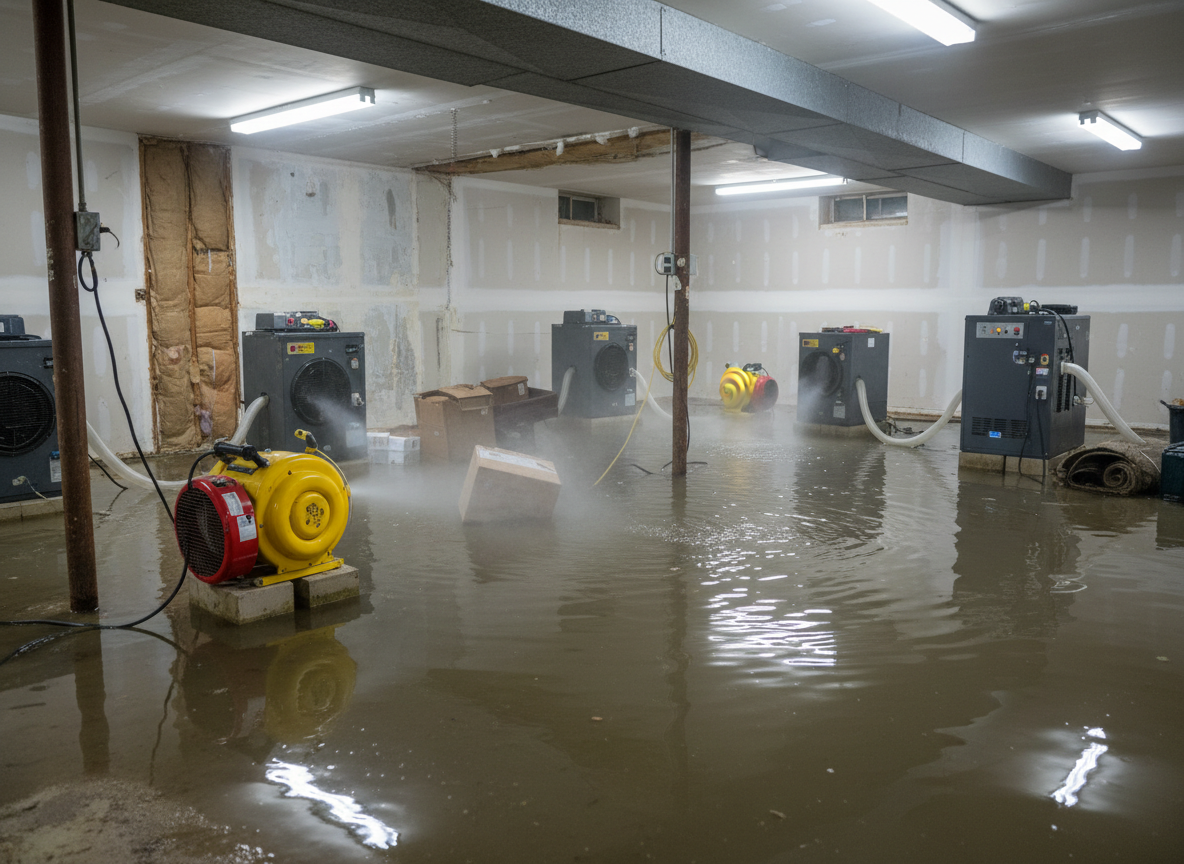
An independent local contractor begins by identifying the water source and classifying it as Category 1 clean water, Category 2 gray water, or Category 3 black water from combined sewer backups common during heavy summer storms in Chicago. They use moisture meters and thermal imaging to locate hidden saturation in older brick bungalows and two-flats with finished basements throughout neighborhoods like Logan Square, Wicker Park, and Hyde Park. Materials that cannot be dried, such as saturated drywall, insulation, and particleboard, are flagged for removal while solid wood and concrete may be dried in place if Category 1 conditions allow.
Safety checks address electrical hazards, structural weakening, and potential mold growth when drying is delayed after winter pipe bursts or summer flooding. Edge cases include multi-story water migration through lath-and-plaster walls in pre-war buildings and contamination spread via HVAC systems in Lakeview and Uptown apartments. Documentation of affected areas, water category, and necessary removals supports insurance claims without promising coverage outcomes.
Contractors note when sump pump failures or power outages during storms have allowed water to remain standing, raising contamination levels. They distinguish between flood damage and sewer backup for proper rider application on policies. All findings are explained on site so homeowners understand which items must be discarded versus which can undergo professional drying.
Technician insight
In Chicago the thing that catches most people out with Water Damage Inspection is how combined sewers push Category 3 water into finished basements of older two-flats in places like Pilsen and South Loop, saturating subflooring that a surface check misses until demolition starts.
Sewer Backup Inspection in Logan Square Two-Flat
Heavy rain caused combined sewer water to enter a finished basement. The contractor identified Category 3 contamination in carpet pad and lower drywall. Affected materials were marked for removal and moisture readings documented the remaining concrete slab. Drying was scheduled after verification that hidden wall cavities stayed dry.
Water Damage Inspection Services We Offer
✓Category Water Classification
An independent local contractor determines whether water is Category 1, 2, or 3 to guide safe removal decisions and prevent cross-contamination in Chicago basements.
✓Moisture Mapping and Detection
Thermal imaging and meter readings locate hidden water behind walls and under floors in older two-flats and bungalows across Cook County.
✓Basement Backup Evaluation
Assessment of combined sewer overflow damage typical after summer storms, identifying which finished materials require removal versus drying.
✓Burst Pipe Inspection
Evaluation of winter freeze damage in supply lines, documenting affected areas in brick homes in neighborhoods like Bridgeport and Rogers Park.
✓Insurance Documentation Support
Independent contractors record water category, moisture readings, and scope details to assist with claim filing for flood versus sewer-backup riders.
How it works
- 1
Call The Referral Line
Contact Pro Water Damage Solutions to request a water damage inspection for your Chicago property.
- 2
Contractor Performs On-Site Inspection
An independent local contractor visits, measures moisture, classifies the water, and checks structural impact.
- 3
Scope And Pricing Discussion
The contractor explains findings, required removals, drying needs, and pricing based on the specific job.
- 4
Work And Drying Verification
If you proceed, the contractor removes unsalvageable materials, sets drying equipment, and returns to confirm moisture levels have dropped.
Pricing
pricing depends on the job and is discussed with the contractor after you call