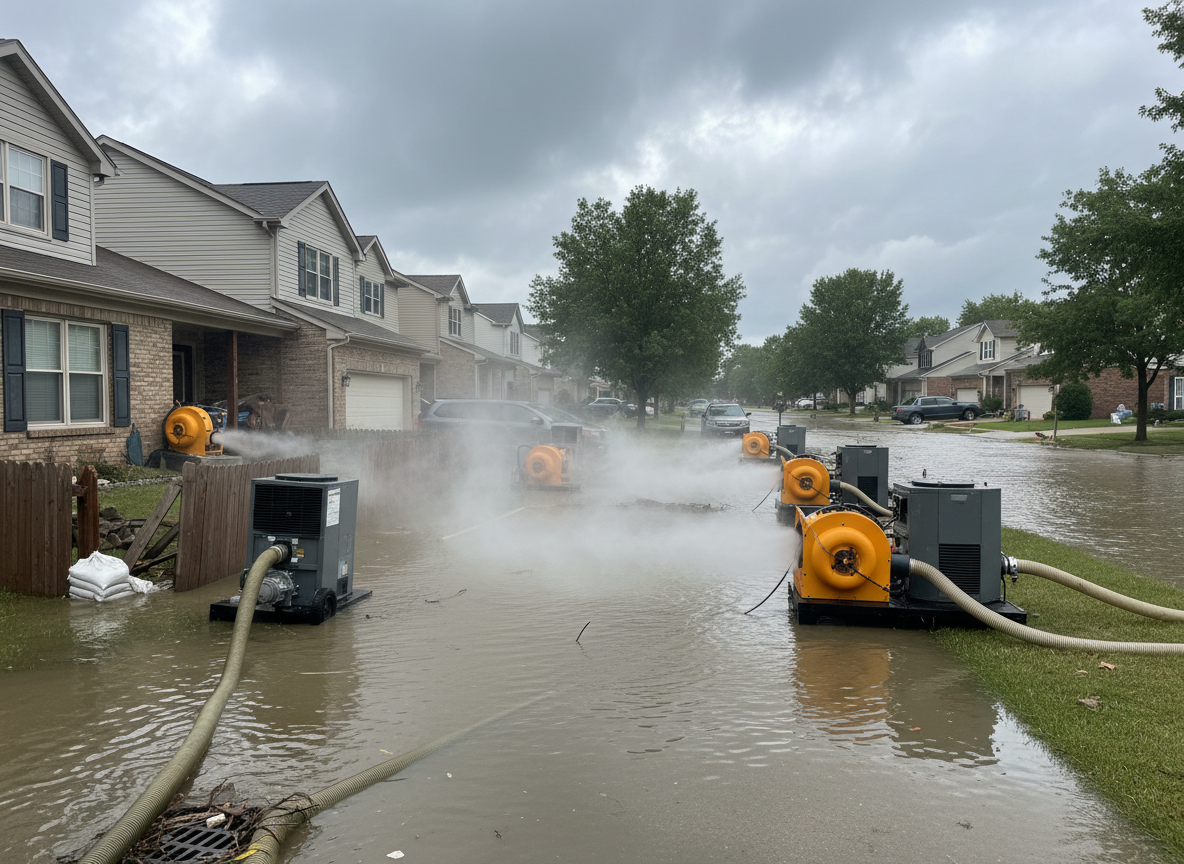
Water damage cleanup starts with identifying the water category and removing materials that cannot be salvaged. Category 1 water from a clean source may allow drying of certain porous items, while Category 2 and 3 water from gray or black sources requires removal of carpet padding, drywall below the flood line, and insulation. In Chicago’s older brick two-flats and bungalows, finished basements often hide moisture behind paneling or under laminate flooring that must be cut away to prevent hidden mold growth. Independent local contractors document the affected square footage and moisture readings before any drying equipment is placed.
Combined sewer systems in neighborhoods such as Lincoln Park, Wicker Park, and Logan Square frequently back up during summer storms, sending contaminated water into lower levels. Contractors extract standing water, then use air movers and dehumidifiers sized to the space while monitoring humidity levels daily. Frozen pipes that burst during cold winters create similar extraction needs but often affect upper floors and ceilings in wood-frame buildings common in Lakeview and Uptown. Safety steps include shutting off electrical circuits in wet areas and using PPE when Category 3 water is present.
Edge cases include water that has wicked into hardwood floors or behind brick masonry, where drying times extend and additional demolition may be required. Contractors also address secondary issues such as warped subfloors or compromised electrical outlets that must be replaced after moisture removal. All work follows IICRC standards for documentation that homeowners can submit to insurers for possible reimbursement under flood or sewer-backup riders.
Insurance Documentation
Independent local contractors provide moisture maps, photos, and written scopes that homeowners forward to their insurance carrier. Claims are handled directly between the homeowner and insurer; the referral service does not bill carriers.
Technician insight
In Chicago, the thing that catches most people out with Water Damage Cleanup is how quickly moisture travels behind plaster and lathe in pre-war two-flats once a combined sewer backs up. Homeowners often stop at visible puddles on the basement slab and miss the fact that the same water has wicked six inches up the walls and under the stairs. That hidden path turns a one-day extraction into a multi-day drying job with extra demolition.
Sewer Backup After Summer Storm
Heavy rain overwhelmed the combined sewer in a Lincoln Park two-flat, sending Category 3 water into a finished basement. The independent contractor found water behind the lower three feet of drywall and under the laminate flooring. Affected materials were removed, drying equipment was run for four days with daily readings, and the space was returned to the homeowner with documentation for their insurance claim.
Water Damage Cleanup Services We Offer
✓Basement Flood Extraction
Contractors remove standing water from lower levels common in Chicago two-flats and place drying equipment sized for older brick foundations.
✓Category 3 Water Remediation
Black water from sewer backups requires full removal of affected porous materials and antimicrobial treatment in line with safety protocols.
✓Burst Pipe Drying
Winter pipe failures in unheated spaces are addressed by extracting water, cutting wet drywall, and running monitored drying cycles.
✓Sump Pump Failure Cleanup
When backup power fails during storms, contractors extract water that entered through floor drains and dry adjacent finished surfaces.
✓Finished Basement Material Removal
Saturated carpet, padding, and lower drywall sections are removed to allow proper drying of structural elements in older homes.
How it works
- 1
Make the Call
Contact the referral line and describe the water source, affected rooms, and any immediate safety concerns such as electrical exposure.
- 2
Contractor Inspection
An independent local contractor visits the property, measures moisture, identifies water category, and explains the full scope and pricing.
- 3
Work Execution
Extraction, demolition of unsalvageable materials, and placement of drying equipment begin once the homeowner approves the plan.
- 4
Drying Verification
Daily moisture checks continue until readings return to normal; the contractor then removes equipment and leaves the space ready for repairs.
Pricing
pricing depends on the job and is discussed with the contractor after you call