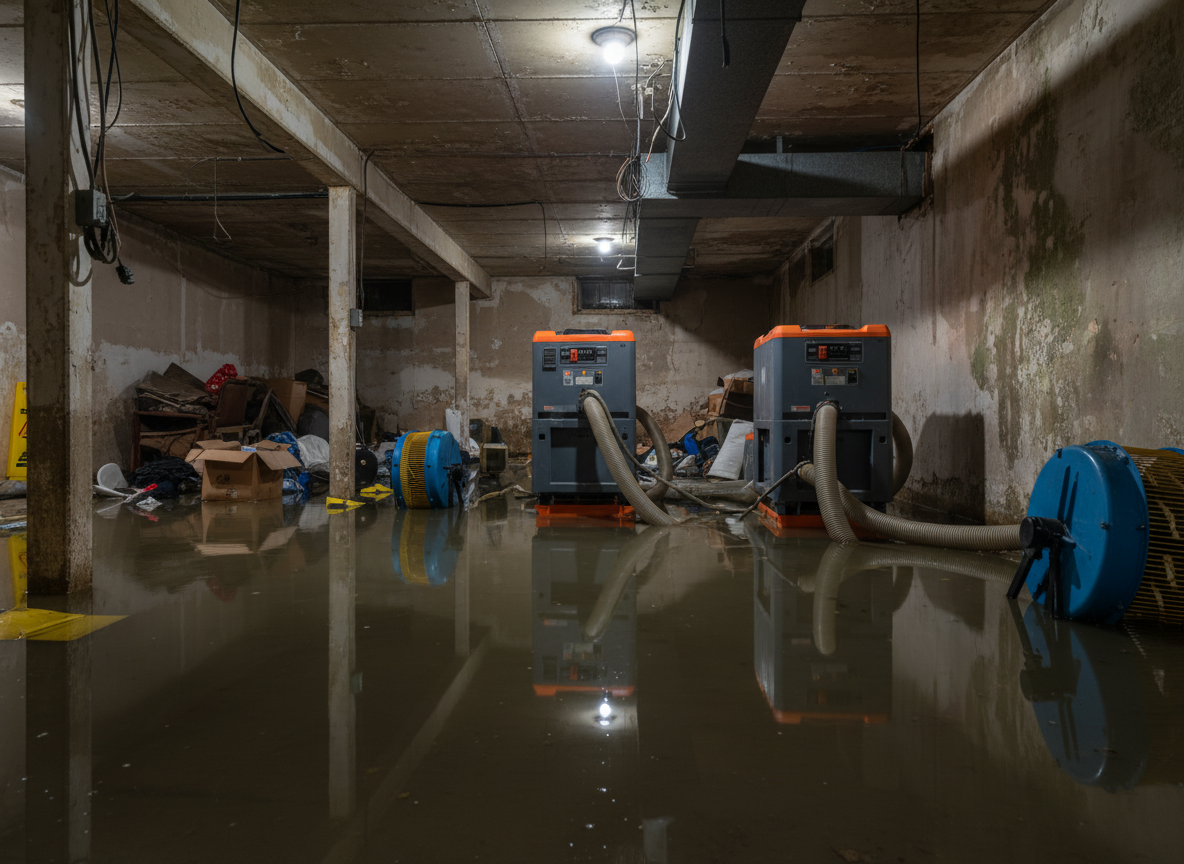
An independent local contractor begins by classifying the water as Category 1 clean, Category 2 gray or Category 3 black before any drying or removal decisions are made. In Chicago homes with combined sewers, heavy summer storms frequently push contaminated water into finished basements of older brick two-flats and bungalows, making early identification critical. Materials such as saturated carpet pad, drywall below the water line and insulation must be removed while solid wood subfloors and framing can often be dried in place once moisture readings confirm safe levels. Safety warnings include turning off power to affected circuits and avoiding contact with sewage-tinged water until the category is confirmed.
Edge cases common in Cook County include hidden moisture behind plaster walls in pre-war buildings and ice-dam leaks that refreeze inside wall cavities during winter. The contractor uses moisture meters and thermal imaging to locate water that has wicked into hardwood floors or traveled under cabinets in neighborhoods such as Lincoln Park and Logan Square. Proper documentation of affected square footage, water category and affected materials supports insurance claims without promising coverage outcomes. Homeowners should expect the assessment to identify both visible damage and potential mold growth risks once temperatures rise after cold-weather pipe bursts.
Drying before mold sets in requires confirming that relative humidity and material moisture content have returned to acceptable ranges, typically checked over several days. An independent local contractor will note when finished basements in Wicker Park or Hyde Park require temporary power solutions because sump-pump failures during storms leave standing water for extended periods. This assessment phase prevents unnecessary demolition while flagging items that cannot be salvaged, such as particleboard furniture or porous items exposed to Category 3 water.
Technician insight
In Chicago, the thing that catches most people out with Water Damage Assessment is how quickly Category 3 sewer water from combined sewers travels under finished floors in pre-1950 two-flats during a single heavy summer storm, especially when the home has no functioning backup sump power.
Sewer Backup Assessment After Storm in Lincoln Park
Heavy rain overwhelmed combined sewers and pushed water into a finished basement. The contractor classified the water as Category 3, mapped moisture that had wicked behind drywall and under laminate, and documented all affected materials. Removal of pad and lower drywall plus targeted drying of framing followed, with final readings confirming safe moisture levels.
Water Damage Assessment Services We Offer
✓Moisture Mapping and Detection
An independent local contractor uses meters and imaging to locate hidden water in walls, floors and ceilings before any drying plan is finalized.
✓Water Category Classification
The contractor determines whether water is clean, gray or black so removal and safety protocols match the actual contamination level present.
✓Structural Drying Assessment
Evaluation identifies which building materials can be dried in place versus those that must be removed to prevent long-term issues in Chicago homes.
✓Basement Backup Inspection
Focuses on combined sewer overflows common during summer storms and checks sump pump function plus potential hidden moisture in older two-flats.
✓Insurance Documentation Support
The contractor records square footage, water category and affected materials to help homeowners prepare accurate information for their insurance carrier.
How it works
- 1
Call The Referral Line
Contact Pro Water Damage Solutions to request a water damage assessment and receive a connection to an independent local contractor serving your Chicago neighborhood.
- 2
Contractor Inspects And Explains Scope
An independent local contractor visits the property, classifies the water, maps moisture and reviews findings along with pricing directly with you before any work begins.
- 3
Work Proceeds If Approved
Once you approve the scope, the contractor performs necessary removal, drying and documentation according to the assessment results.
- 4
Drying Checks Continue
The contractor returns to verify moisture levels have stabilized and confirms that materials are safe before concluding the drying phase.
Pricing
pricing depends on the job and is discussed with the contractor after you call