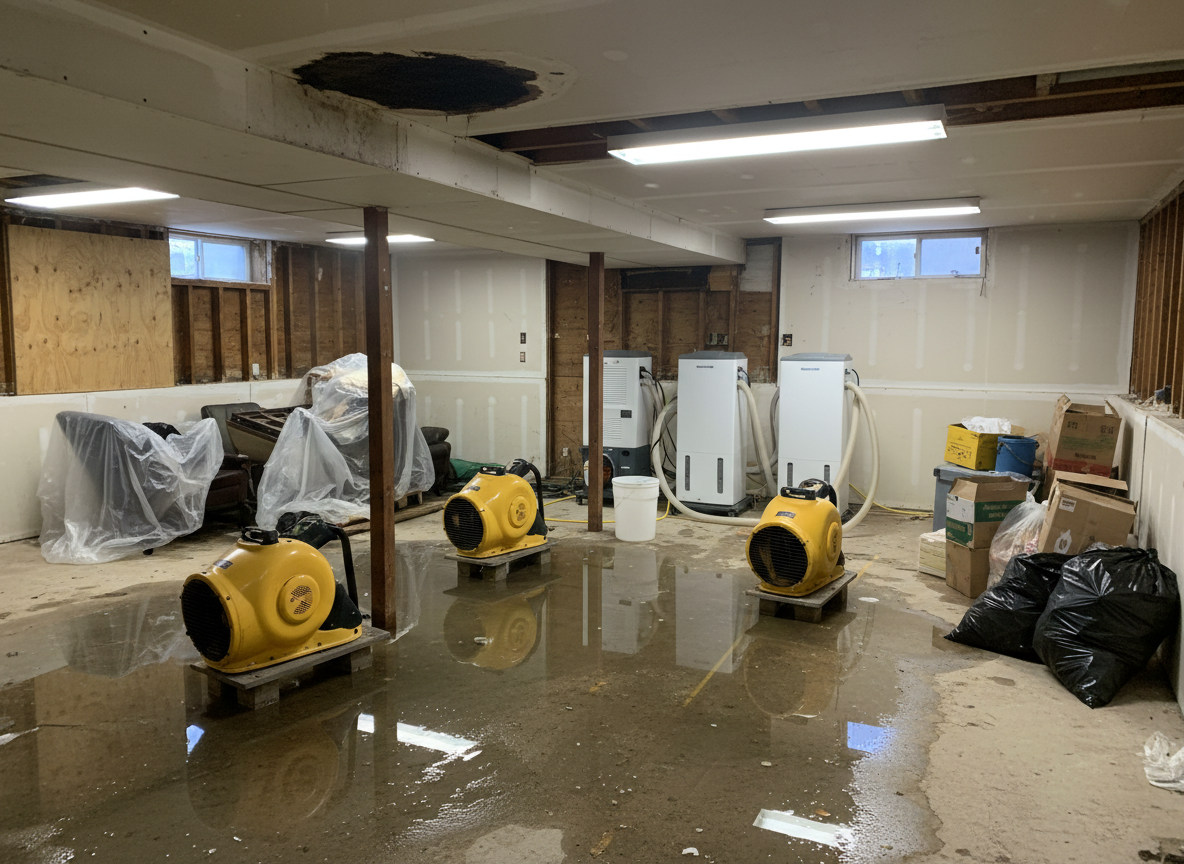
Mold remediation after water damage begins with identifying the water category and removing or drying affected materials accordingly. Porous items such as drywall, carpet padding, insulation and finished basement paneling exposed to Category 2 or 3 water must be cut out and discarded because they cannot be reliably cleaned. Non-porous surfaces like concrete floors or brick can often be dried and treated once the source is stopped and the area is contained.
In Chicago older brick two-flats and bungalows with finished basements frequently develop hidden growth after combined sewer backups during heavy summer storms or after frozen pipes burst in winter. Independent local contractors establish negative air pressure, use HEPA filtration and remove contaminated materials while protecting unaffected rooms. Homeowners should avoid disturbing visible mold before containment is in place because spores can spread through HVAC systems common in these older buildings.
Drying verification includes moisture meter readings on remaining wood joists and subfloors plus clearance air sampling when required. Edge cases such as mold in HVAC ducts or behind plaster in pre-war homes in Logan Square or Bridgeport require specialized containment and sometimes selective demolition that only a contractor who knows local construction can scope accurately.
Technician insight
In Chicago, the thing that catches most people out with Mold Remediation is hidden growth behind plaster or in the cavities of pre-war brick two-flats after a summer combined sewer backup. The older balloon framing and lack of vapor barriers let water wick upward and sideways so surface cleaning alone never solves it.
Wicker Park Finished Basement After Summer Storm
Heavy rain overwhelmed combined sewers and water entered through the floor drain of a 1920s two-flat. The contractor found Category 3 water had wicked into drywall and carpet padding on two walls. Affected materials were removed, the space was contained and dried, and clearance samples passed before new finishes were installed.
Mold Remediation Services We Offer
✓Basement Mold Removal
Targets growth in finished or unfinished basements after sewer backups common in Chicago two-flats and bungalows.
✓Post-Flood Mold Cleanup
Addresses mold following Category 3 black water events in neighborhoods prone to street flooding like South Loop and Bridgeport.
✓Attic Mold Remediation
Removes mold caused by ice dam leaks or poor ventilation in older Chicago homes during cold winters.
✓HVAC Mold Treatment
Cleans and contains mold inside ductwork that can spread spores after basement or crawlspace water intrusion.
✓Drywall and Insulation Removal
Cuts out and disposes of water-damaged porous materials that cannot be salvaged after Category 2 or 3 exposure.
How it works
- 1
Call The Referral Line
Contact Pro Water Damage Solutions and describe the water event and visible mold location.
- 2
Independent Local Contractor Inspects
A contractor visits, determines water category, measures moisture and explains the required scope and pricing.
- 3
Work Is Performed
Containment, removal of affected materials, cleaning of salvageable surfaces and initial drying steps take place.
- 4
Drying Checks And Clearance
Moisture readings confirm the structure is dry and any required air sampling is completed before final walkthrough.
Pricing
pricing depends on the job and is discussed with the contractor after you call