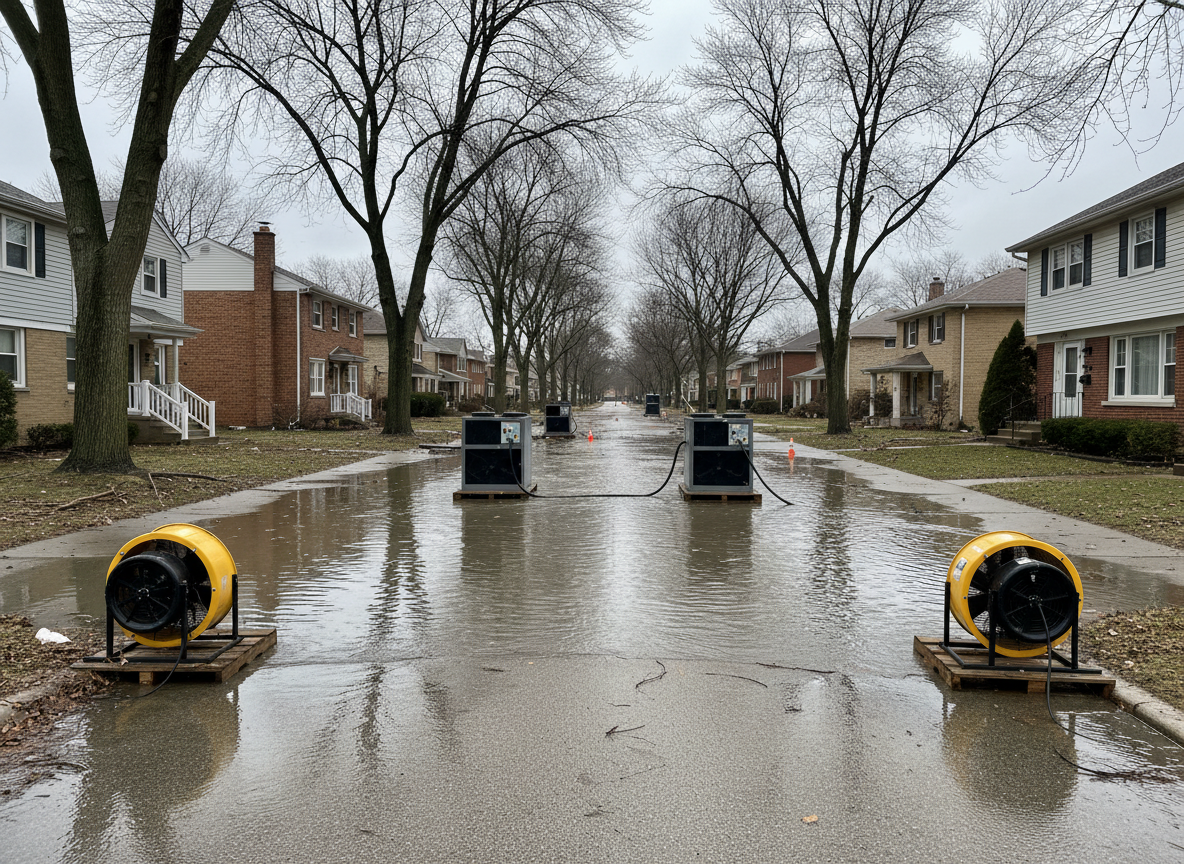
Flood restoration after heavy rain or pipe failure begins with identifying the water category. Category 1 water from a clean supply line can often be dried in place once the source is stopped, while Category 2 gray water and Category 3 black water from combined sewers require removal of saturated porous materials such as carpet pad, drywall below the flood line and insulation. In Chicago two-flats and brick bungalows with finished basements, contractors typically cut away the lower two to four feet of drywall to prevent hidden mold growth behind baseboards and cabinets.
Independent local contractors also address edge cases common in Cook County, including frozen and burst pipes during winter cold snaps and sump pump failures when power is lost. They document moisture readings with meters before and after drying equipment is placed, then remove any remaining standing water and apply antimicrobial treatments only where Category 3 water has contacted surfaces. Homeowners should avoid entering affected areas until power is isolated and visible mold or sewage is confirmed absent.
Safety warnings include shutting off electricity to flooded rooms, wearing protective gear when handling contaminated water and never attempting to salvage items that have been submerged in sewer water. Proper disposal of removed materials follows local landfill rules for construction debris containing water-damaged drywall and carpet.
Technician insight
In Chicago the thing that catches most people out with Flood Restoration is how quickly combined sewer water travels under the slab in older two-flats and reaches finished rooms on the opposite side of the basement; once it does, you have to open walls you did not expect and the job grows fast.
Wicker Park Two-Flat Sewer Backup
Heavy summer rain overwhelmed the combined sewer line and sent water into a finished basement. The contractor found Category 3 water had wicked into drywall on three walls and saturated carpet pad throughout. They removed the lower drywall sections, extracted water, placed drying equipment and returned for daily readings until levels matched unaffected areas.
Flood Restoration Services We Offer
✓Basement Flood Extraction
Independent contractors remove standing water from Chicago basements after storms and document moisture levels before drying begins.
✓Sewer Backup Remediation
Contractors handle Category 3 water from combined sewer overflows common in older neighborhoods during summer storms, removing affected materials and cleaning hard surfaces.
✓Burst Pipe Water Removal
Local contractors respond to winter pipe bursts in two-flats and bungalows, isolating the source and extracting water before structural drying.
✓Finished Basement Drying
Contractors set up drying equipment in finished spaces and monitor readings to prevent mold in insulated walls and flooring common in Lincoln Park and Logan Square homes.
✓Category 3 Water Cleanup
Contractors follow safety protocols for black water events, discarding porous materials and treating remaining surfaces in affected rooms.
How it works
- 1
Call The Referral Line
You contact Pro Water Damage Solutions and provide details about the flood location and water source.
- 2
Contractor Inspection And Scope
An independent local contractor visits the property, identifies water category, explains what materials must be removed and discusses pricing for the job.
- 3
Restoration Work Begins
The contractor extracts water, removes unsalvageable materials and sets up drying equipment while following safety steps for the water type present.
- 4
Drying Checks And Completion
The contractor returns to take moisture readings, confirms drying goals are met and clears equipment once levels are acceptable.
Pricing
pricing depends on the job and is discussed with the contractor after you call