Flood cleanup begins with identifying the water category. Category 1 water from clean sources can often be extracted and dried if caught early, while Category 2 gray water and Category 3 black water from combined sewers require removal of saturated porous materials such as carpet padding, drywall below the flood line, and insulation. In Chicago's older brick bungalows and two-flats, finished basements trap moisture behind plaster and under flooring, so contractors cut away affected sections rather than attempting to dry them in place.
Safety comes first because standing water can hide electrical hazards and sewage can carry pathogens. Independent local contractors ventilate the space, use PPE, and test moisture levels in subfloors and joists before starting extraction. During heavy summer storms, Cook County's combined sewer system frequently backs up into basements in Lincoln Park, Wicker Park, and Logan Square, so the work includes pumping out contaminated water and disposing of it according to local regulations.
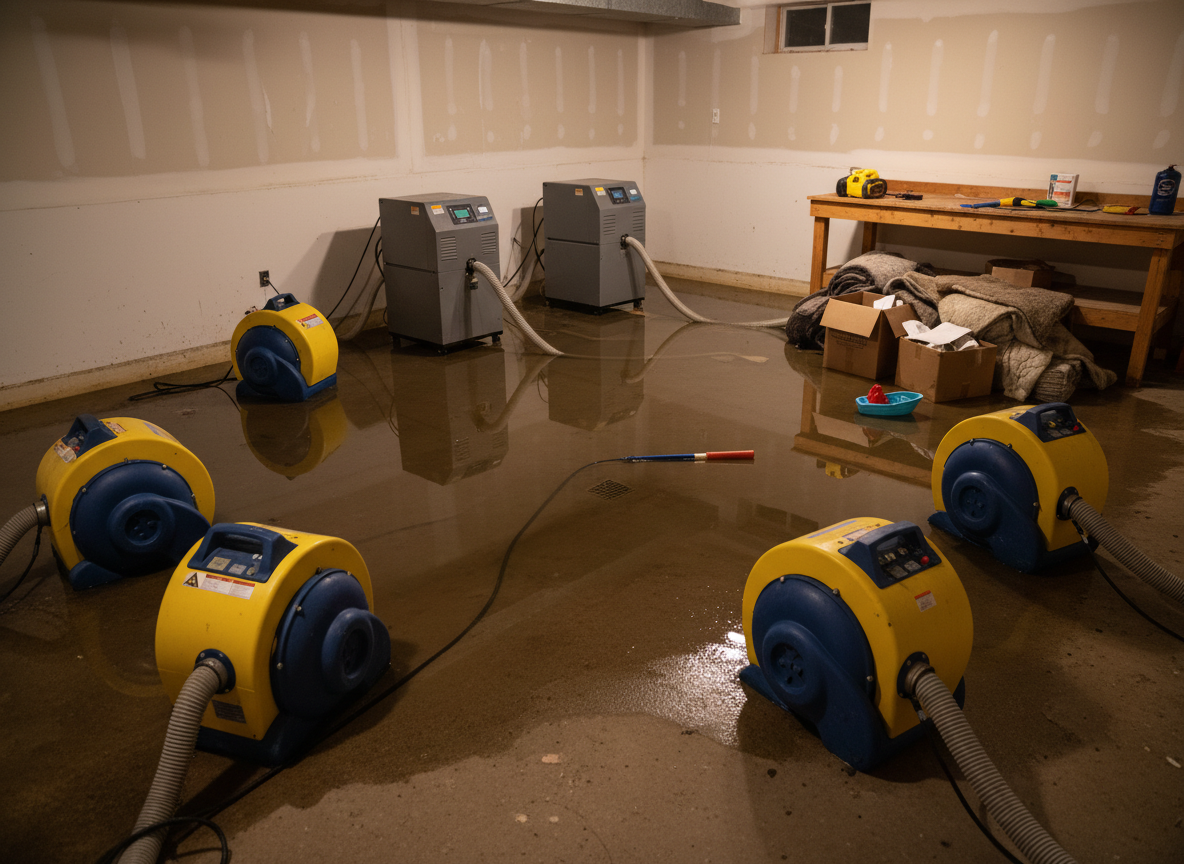
Drying follows extraction using air movers and dehumidifiers sized for the square footage and construction type. Contractors monitor progress with moisture meters until readings return to normal, preventing hidden mold growth in wall cavities common in pre-war homes. Edge cases include frozen and burst pipes during winter in neighborhoods like Hyde Park and Rogers Park, where water can travel between floors before being discovered.
Technician insight
In Chicago, the thing that catches most people out with Flood Cleanup is how quickly moisture travels behind plaster in pre-1950 two-flats after a combined sewer backup. Homeowners often focus on the visible water in the basement but miss the fact that the same event can push water into wall cavities shared with the unit above, especially in Logan Square or Uptown buildings with balloon framing.
Summer Storm Sewer Backup In A Wicker Park Two-Flat
Heavy rain overwhelmed the combined sewer and sent Category 3 water into a finished basement. The contractor found water had wicked up six inches into drywall on two walls and saturated carpet padding throughout. Extraction and removal of the lower drywall sections plus padding were completed, followed by drying of the remaining structure and subfloor.
Flood Cleanup Services We Offer
✓Basement Flood Extraction
Removes standing water from Chicago basements after storms or sewer backups before affected materials are assessed for drying or removal.
✓Sewer Backup Cleanup
Handles Category 3 water from combined sewers common in Cook County, including disposal of contaminated porous materials and disinfection of hard surfaces.
✓Burst Pipe Water Removal
Extracts water from frozen or failed pipes in older two-flats and bungalows, followed by targeted drying of floors and walls.
✓Category 2 and 3 Water Remediation
Addresses gray and black water with full removal of saturated drywall, insulation, and flooring that cannot be salvaged.
✓Structural Drying Services
Uses professional equipment to dry joists, subfloors, and masonry in Chicago homes after flood events while monitoring moisture levels.
✓Flooded Crawl Space Restoration
Clears water and debris from crawl spaces under older homes in neighborhoods like Bridgeport and Pilsen, then applies drying protocols.
How it works
- 1
Call The Referral Line
Contact Pro Water Damage Solutions to describe the flood situation and receive a connection to an independent local contractor serving your Chicago neighborhood.
- 2
Contractor Inspects And Explains Scope
An independent local contractor visits the property, assesses water category and damage extent, and discusses the work required along with pricing.
- 3
Work Is Performed
The contractor extracts water, removes unsalvageable materials, and begins drying using appropriate equipment for your home's construction.
- 4
Drying Checks Continue
Moisture readings are monitored until the structure reaches dry standards, with final walkthrough to confirm the affected areas are addressed.
Pricing
pricing depends on the job and is discussed with the contractor after you call