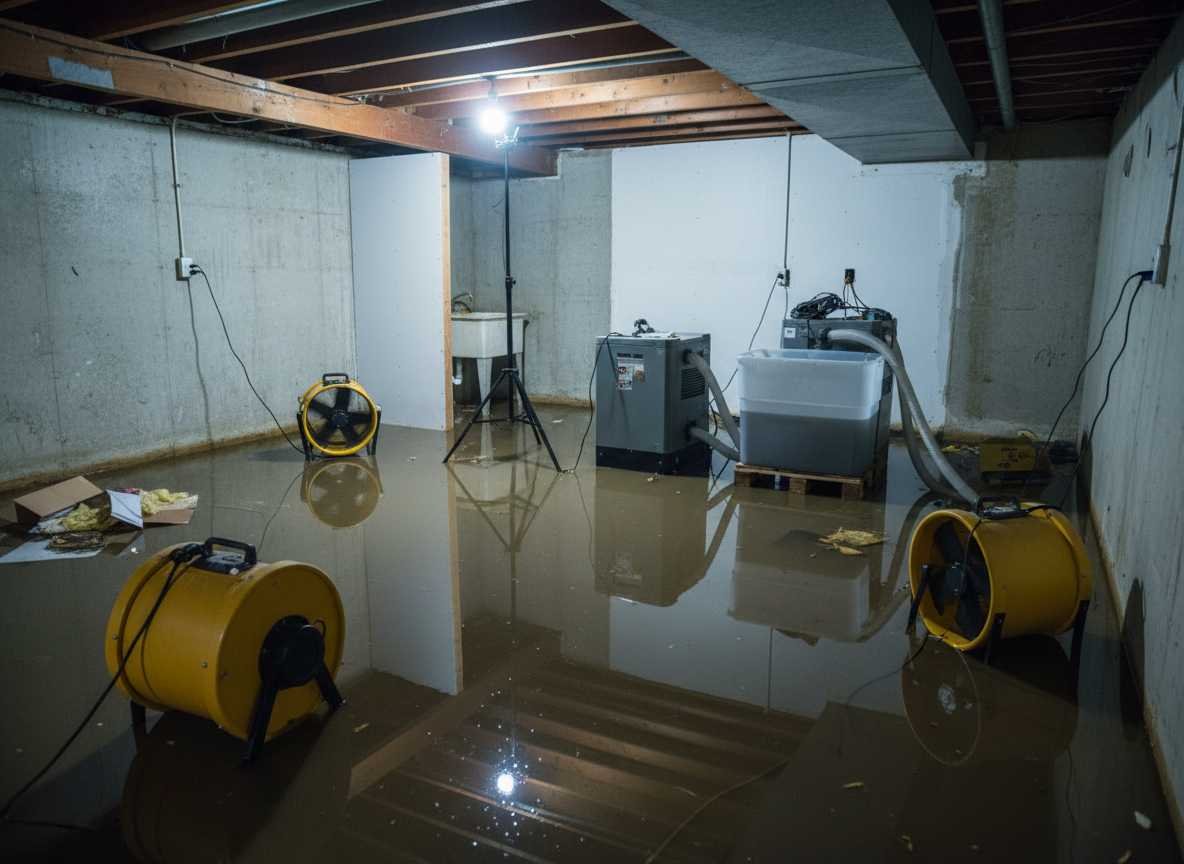
Dehumidification removes excess moisture from structures after water intrusion so that drywall, subfloors and framing can dry without supporting mold growth. Independent local contractors first classify the water as Category 1, 2 or 3, then decide which porous materials must be removed and which can be dried in place. In older Chicago brick bungalows and two-flats, finished basements often require wall cavities to be opened because insulation and base plates trap moisture that standard fans cannot reach.
During humid continental summers, combined sewer backups in Cook County push contaminated water into lower levels of homes in Lakeview, Hyde Park and Bridgeport. Category 3 water always requires removal of saturated carpet pad, particleboard and certain types of insulation. Category 1 clean water from burst pipes may allow drying of hardwood floors if moisture meters show levels returning to normal within a few days, but safety protocols still call for electrical shutoff and ventilation before equipment is placed.
Contractors use commercial dehumidifiers, air movers and moisture meters to track progress, checking both visible surfaces and hidden cavities in attics or crawl spaces common in Rogers Park and Andersonville homes. Edge cases include frozen pipes that refreeze after initial thawing or sump pump failures that recur during heavy rain. Homeowners are advised to avoid running household fans that can spread spores and to keep children and pets away from affected areas until clearance readings are obtained.
Technician insight
In Chicago, the thing that catches most people out with Dehumidification is how quickly moisture travels up plaster walls in pre-1940 two-flats during winter pipe bursts, especially in Logan Square and Andersonville where the brick holds cold and drying takes longer than homeowners expect.
Wicker Park Two-Flat After Frozen Pipe
A burst pipe on the second floor sent Category 1 water into finished basement ceilings. The contractor opened several wall sections, discovered elevated moisture in the lath, and ran dehumidifiers for five days until readings stabilized. Follow-up checks confirmed no hidden pockets remained.
Dehumidification Services We Offer
✓Basement Dehumidification After Sewer Backup
Targets moisture trapped in concrete and behind finished walls following combined sewer events common in Chicago summers.
✓Post-Pipe-Burst Structural Drying
Removes humidity from plaster, lath and hardwood after winter freezes in neighborhoods such as West Loop and South Loop.
✓Crawlspace and Attic Moisture Removal
Addresses hidden humidity in older two-flats and bungalows where ventilation is limited.
✓Category 3 Water Dehumidification Protocols
Applies containment and extraction steps required when sewage or floodwater has entered living spaces.
✓Finished Basement Drying in Brick Bungalows
Opens wall cavities and monitors subfloor moisture in pre-war homes found throughout Pilsen and Uptown.
How it works
- 1
Call The Referral Line
Contact Pro Water Damage Solutions and describe the water event and affected areas.
- 2
Independent Local Contractor Inspects
A contractor visits the property, measures moisture, explains the scope and discusses pricing directly with you.
- 3
Work Begins
Equipment is placed, affected materials are removed or isolated, and dehumidification starts.
- 4
Drying Checks Continue
The contractor returns to monitor readings until levels reach safe, dry standards.
Pricing
pricing depends on the job and is discussed with the contractor after you call