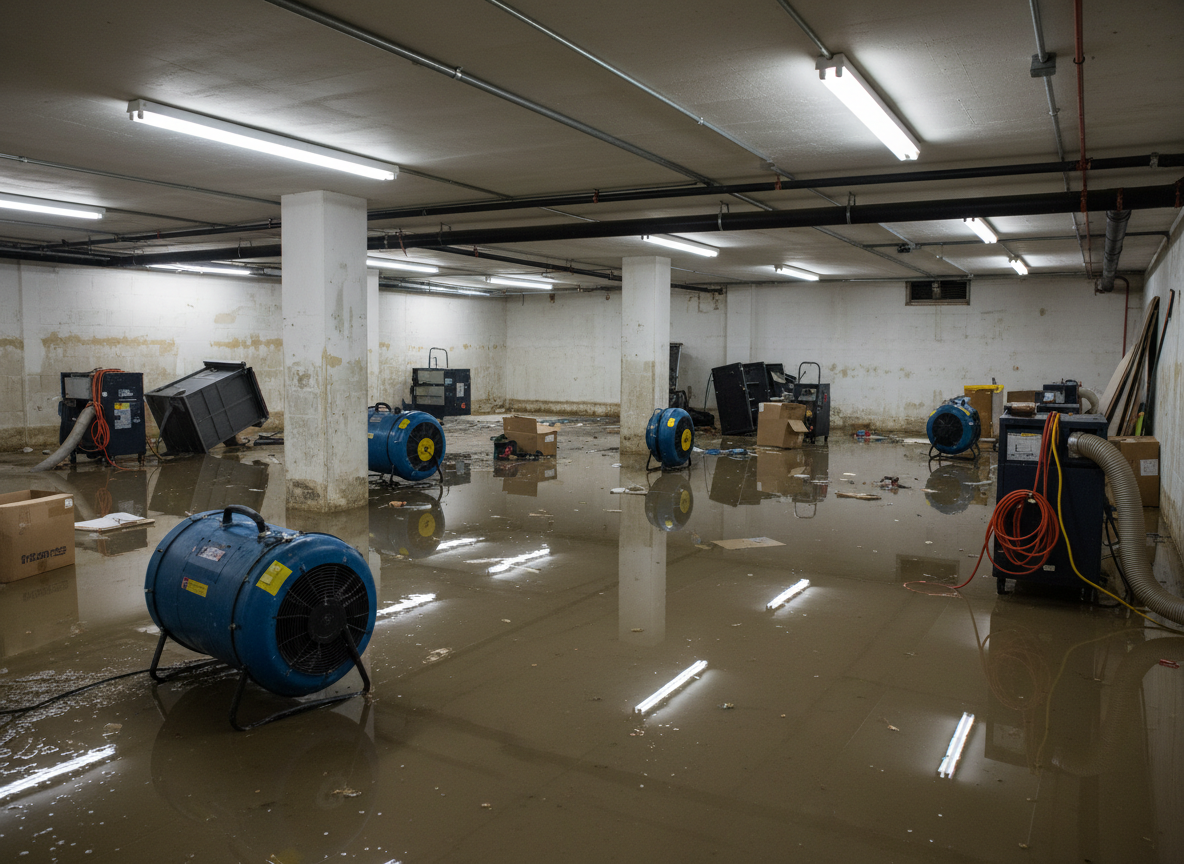
Commercial flood damage in Chicago often stems from combined sewer overflows during heavy summer storms or frozen pipes that burst in older brick two-flats and commercial structures during winter. Independent local contractors assess water category on arrival, removing porous materials like saturated carpet, drywall below the flood line, and insulation that cannot be reliably dried while preserving non-porous surfaces such as concrete and metal when possible. Category 3 water from sewers requires full containment, disposal of affected contents, and antimicrobial application, whereas Category 1 clean water allows more selective drying with air movers and dehumidifiers.
Edge cases include finished basements in West Loop or South Loop buildings where electrical systems sit near water lines, creating shock hazards that demand immediate power isolation before extraction begins. Contractors document moisture readings at multiple depths in flooring and walls to confirm drying progress and reduce the chance of hidden mold growth behind brick or plaster. Safety warnings focus on avoiding enclosed spaces with standing water until ventilation and extraction equipment are in place.
Work in neighborhoods such as Logan Square or Bridgeport frequently involves coordinating with building management to limit business interruption while addressing both visible flooding and moisture trapped in subfloor voids common to pre-war commercial properties.
Technician insight
In Chicago, the thing that catches most people out with commercial flood damage restoration is how quickly Category 3 water from the combined sewer system travels under older brick foundations in neighborhoods like Pilsen or Uptown, saturating subfloor voids that standard extraction misses.
Sewer Backup in Logan Square Retail Space
Heavy summer rain caused combined sewer backup into a ground-floor retail space. The contractor found Category 3 water under laminate flooring and in wall cavities. Affected materials were removed, the area was extracted and dried with commercial equipment, and final moisture readings confirmed safe levels.
Commercial Flood Damage Restoration Services We Offer
✓Commercial Basement Flood Extraction
Independent local contractors remove standing water from flooded basements in older Chicago commercial buildings using pumps and vacuums suited to combined sewer events.
✓Office Water Damage Drying
Contractors place commercial-grade dehumidifiers and air movers to dry carpet, drywall, and insulation in office spaces after leaks or storm-related flooding.
✓Restaurant Category 3 Water Removal
Specialized removal of contaminated water from food service areas includes disposal of affected porous materials and sanitization to meet health standards.
✓Retail Space Flood Mitigation
Contractors extract water from retail floors and stockrooms while protecting merchandise and documenting conditions for insurance claims.
✓Warehouse Dehumidification Services
Large-scale drying equipment addresses moisture in warehouse concrete and stored goods following burst pipes or heavy rain intrusion.
How it works
- 1
Make the Call
Contact the referral line and describe the commercial flood damage location and visible conditions.
- 2
Contractor Inspection
An independent local contractor visits the site, measures moisture levels, identifies water category, and explains the scope and pricing.
- 3
Restoration Work
The contractor removes unsalvageable materials, extracts water, and sets up drying equipment.
- 4
Drying Verification
Periodic checks confirm moisture has returned to normal levels before equipment is removed and the space is released.
Pricing
pricing depends on the job and is discussed with the contractor after you call