2026-11-22 ·
Typical Timeline for Drying Out After Chicago Flooding
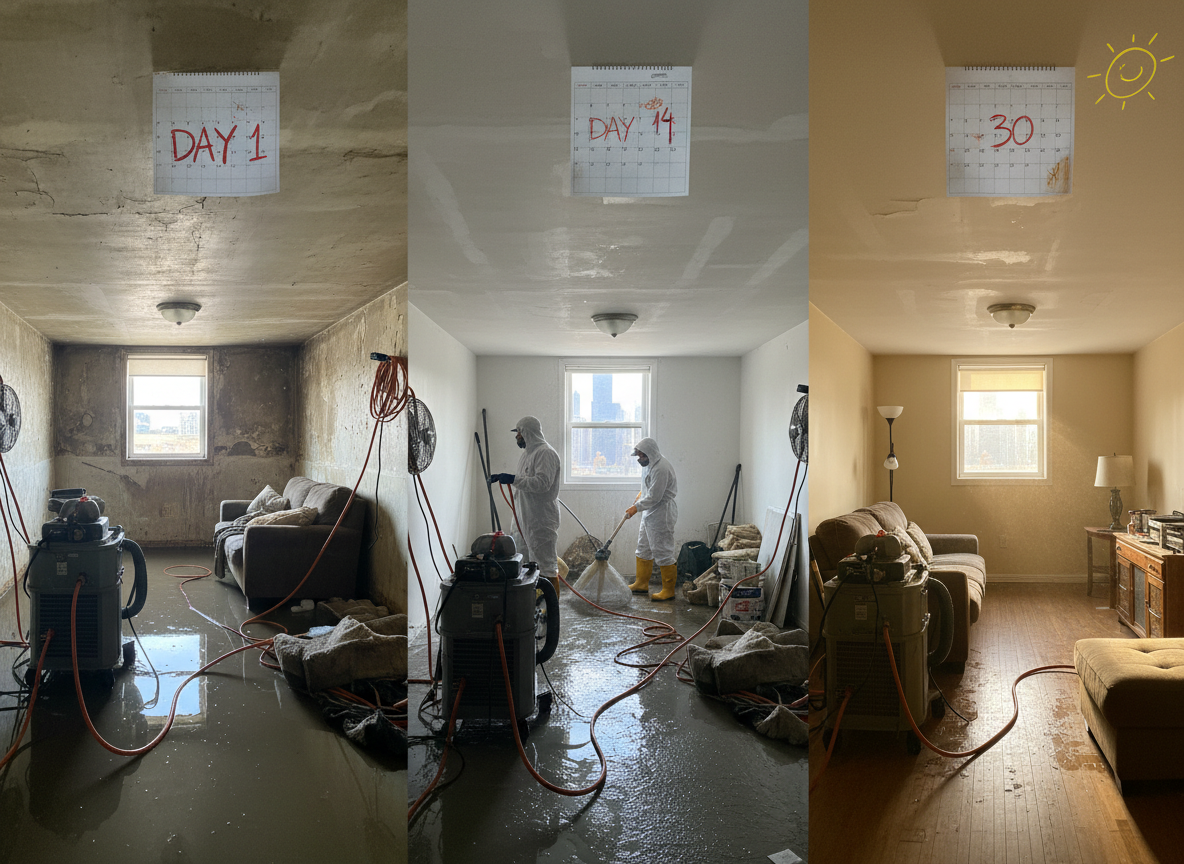
After Chicago flooding the typical timeline for drying out a basement runs 5 to 14 days once standing water is removed. The exact length depends on water category, how much moisture reached walls and floors, and the season. Chicago homes in neighborhoods such as Lincoln Park, Wicker Park and Logan Square often have finished basements in older two-flats that trap moisture behind plaster and under hardwood.
Initial Water Extraction
An independent local contractor begins by removing bulk water with pumps and extraction equipment. In summer storms that overwhelm combined sewers this step can take several hours to a full day. Basements in Hyde Park and Bridgeport frequently see Category 2 or 3 water that requires careful handling to avoid spreading contaminants. Once visible water is gone the focus shifts to hidden moisture in subfloors and behind baseboards. Proper extraction prevents longer drying times later. Readers can review flood damage restoration for more on handling sewer-influenced water.
Structural Drying Phase
After extraction, air movers and dehumidifiers run continuously to pull moisture from wood joists, drywall and concrete. In Chicago humid continental summers this phase often lasts 3 to 7 days. Homes in Lakeview and Uptown with thick brick walls dry more slowly than newer construction. An independent local contractor checks moisture readings daily and adjusts equipment placement. When drying occurs before mold sets in, homeowners avoid additional remediation steps. The process links directly to structural drying and dehumidification techniques used across Cook County.
Monitoring Moisture Levels
Contractors use moisture meters and infrared cameras to track progress in hidden areas. Readings must drop below 15 percent moisture content in wood before walls can be closed. In winter burst-pipe events common in Rogers Park and Andersonville, frozen cavities thaw slowly and extend monitoring by several days. Daily logs help document conditions for insurance claims. This documentation shows the progression from wet to dry without relying on visual inspection alone.
Chicago Climate and Building Factors
Hot humid summers and cold winters create distinct drying challenges. Heavy rain events in July and August often coincide with high outdoor humidity that slows dehumidifier performance. Older bungalows in Pilsen and South Loop have porous brick and limited ventilation that trap moisture longer than modern builds. Frozen pipes in January add ice that must melt before extraction can finish. These local realities mean timelines stretch when outdoor dew points stay elevated.
Preventing Secondary Issues
Once drying equipment is running, attention turns to contents and air quality. Wet carpet removal and content pack-out protect items that absorb water quickly. Homeowners in West Loop and Evanston often store documents and photos off-site during this period. Proper drying also reduces the chance of mold growth that can appear within 48 hours of incomplete moisture removal. See how to protect basement contents during Chicago lakefront storms for practical steps during repeated weather events.
Readers facing ongoing basement moisture after flooding can call (773) 487-8637 to be connected with an independent local contractor.