2026-11-16 ·
Flood Damage Restoration After Chicago Spring Snowmelt
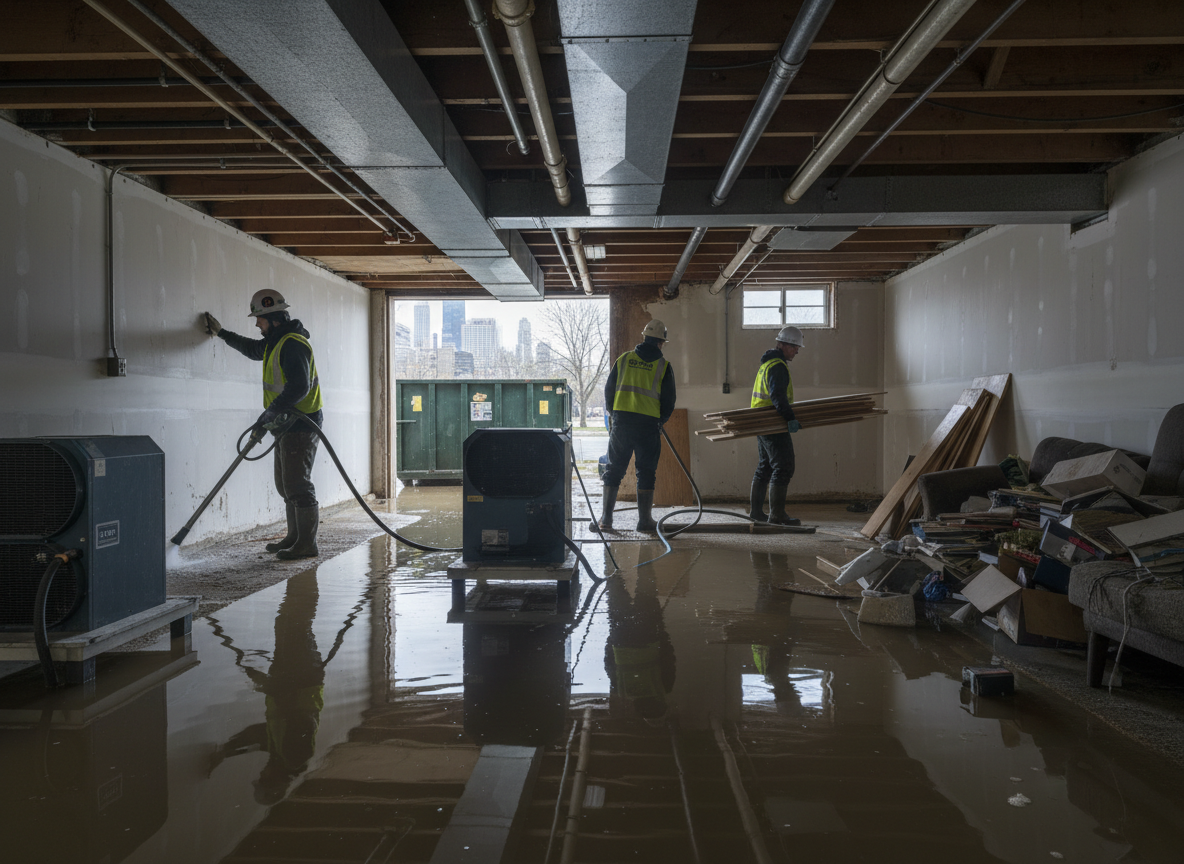
After Chicago spring snowmelt, flood damage restoration starts with identifying water category, removing standing water, and drying structures before mold sets in, particularly in neighborhoods like Lincoln Park, Wicker Park, and Logan Square where older two-flats and bungalows sit on combined sewer systems.
Understanding Snowmelt Flood Risks in Chicago
Chicago's humid continental climate brings cold winters that pile snow on roofs and yards, followed by rapid melts in spring that overwhelm combined sewers and cause basement backups. In areas such as Hyde Park, Bridgeport, and Rogers Park, older brick homes with finished basements face added pressure when sump pumps fail during heavy runoff. Frozen pipes that thaw can release Category 1 clean water that mixes with sewage to become Category 2 or 3. Homeowners should inspect for wet carpet, wall seepage, and musty odors right after temperatures rise above freezing. Linking to local patterns helps residents in Uptown or Andersonville recognize when meltwater combines with storm flows to push sewage into lower levels.
Initial Water Extraction Steps
Begin by shutting off electricity to affected areas and documenting all damage with photos and videos for insurance claims. An independent local contractor can handle extraction using submersible pumps and wet vacuums to pull water from floors and walls before it soaks deeper into concrete or wood. Focus on South Loop and West Loop properties where finished basements trap moisture quickly. Remove wet carpet and padding promptly, then move contents to dry areas. This phase prevents further saturation of insulation and drywall. See the guide on typical timeline for drying out after Chicago flooding for realistic expectations on how long each step takes in local conditions.
Structural Drying and Dehumidification
Once bulk water is gone, air movers and dehumidifiers circulate dry air through the space to lower moisture levels in wood framing, plaster, and subfloors. In Lakeview and Pilsen homes, thick brick walls hold humidity longer, so fans must run continuously for several days. Monitor readings with moisture meters to confirm levels return to normal before closing walls. Proper drying stops secondary damage and reduces the chance of mold colonies forming within 48 hours. Residents can review how to protect basement contents during Chicago lakefront storms for tips on safeguarding items during the drying period.
Mold Prevention After Melt Events
Mold grows fast in humid conditions when residual moisture stays trapped behind baseboards or under flooring. Apply antimicrobial treatments to exposed surfaces and dispose of porous materials that cannot be fully dried. In Evanston and Oak Park, where many homes share Chicago's sewer infrastructure, quick action after snowmelt keeps spores from spreading through HVAC systems. Keep dehumidifiers running until indoor humidity stays below 50 percent. Regular checks in crawl spaces and utility rooms catch hidden growth early.
Insurance Documentation and Next Steps
Photograph every affected area, keep receipts for any temporary measures, and note the date and time of discovery to support claims. Separate flood damage from sewer-backup issues when speaking with adjusters, as riders differ. Readers can call (773) 487-8637 to be connected with an independent local contractor who understands Chicago-specific restoration needs.